Roofing
A roof repair should deal with the route taken by water and the condition around the defect—not just the first cracked tile or visible stain.
Discuss your roof · Report urgent damage
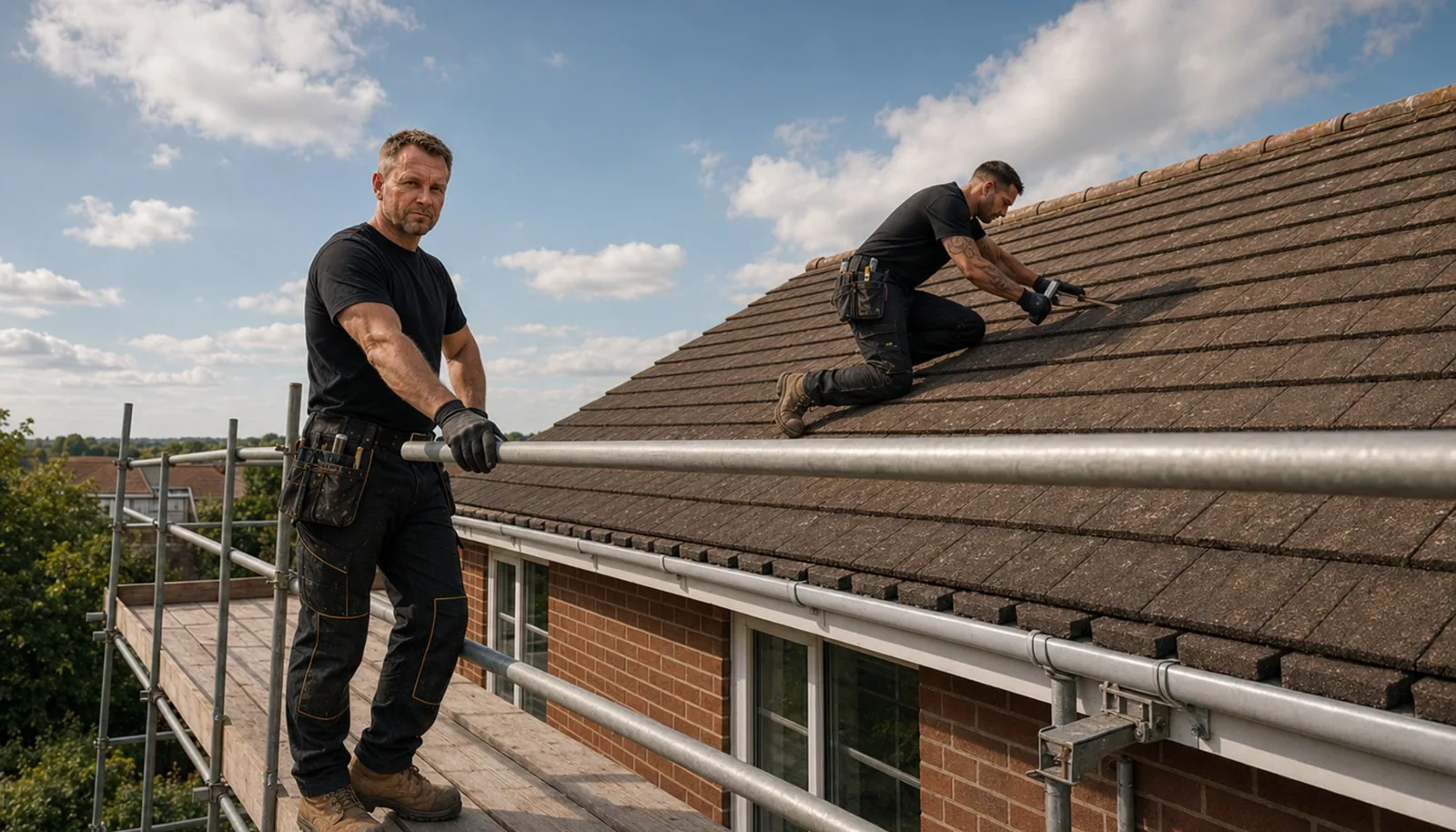
G&M Property Maintenance supports repair and renewal work on pitched and flat roofs. Safe access, weather, roof construction and the condition of the surrounding materials all affect the method.
Water can travel beneath coverings and along timbers before it becomes visible. The internal mark is useful evidence, but it is not always directly below the entry point.
Roof repairs
Local repairs may include damaged tiles or slates, defective flashing, local junctions and other identifiable faults where the surrounding roof remains serviceable.
Pitched roofing
Pitched roofs rely on the covering, battens, underlay, flashings, ridges, verges and ventilation working together. Tile type, pitch, exposure and the condition of adjoining areas matter when deciding whether an isolated repair is realistic.
Flat roofing
Flat roofs need a suitable deck, useful falls, clear outlets and correctly detailed edges, upstands and penetrations. Felt, EPDM and GRP are different systems; they should not be described as interchangeable skins.
Dry ridge and dry verge
Mechanically fixed ridge and verge systems use components designed for the roof covering and layout. Loose or misaligned units need checking rather than simply fastening through anything available.
Urgent and storm-related damage
Missing coverings, loose materials and active water entry should be reviewed promptly, but attendance and safe roof access depend on weather, daylight, equipment and availability. A temporary covering may be the correct first stage and must be identified as temporary.
Repair or wider renewal?
A local repair may offer good value when the surrounding covering and support are sound. Wider renewal may be more sensible where:
- failures are repeated across several areas;
- the deck or battens are unsound;
- previous layers prevent proper detailing;
- outlets, falls or upstands are fundamentally poor;
- a covering is brittle, split or at the end of useful service;
- access costs would be repeatedly incurred for patching.
Larger re-covering or changes in roof material can require Building Regulations checks. Listed buildings, structural changes and some alterations may also require further approvals.
Weather and installation conditions
Roofing products have system-specific requirements. Membranes, resins, adhesives and bituminous products need compatible substrates and suitable conditions. A dry-looking morning is not enough if the deck is damp or the forecast will prevent correct curing or bonding.
Manufacturer instructions and safe-working requirements should control the installation.
Roofs, gutters and walls should be considered together
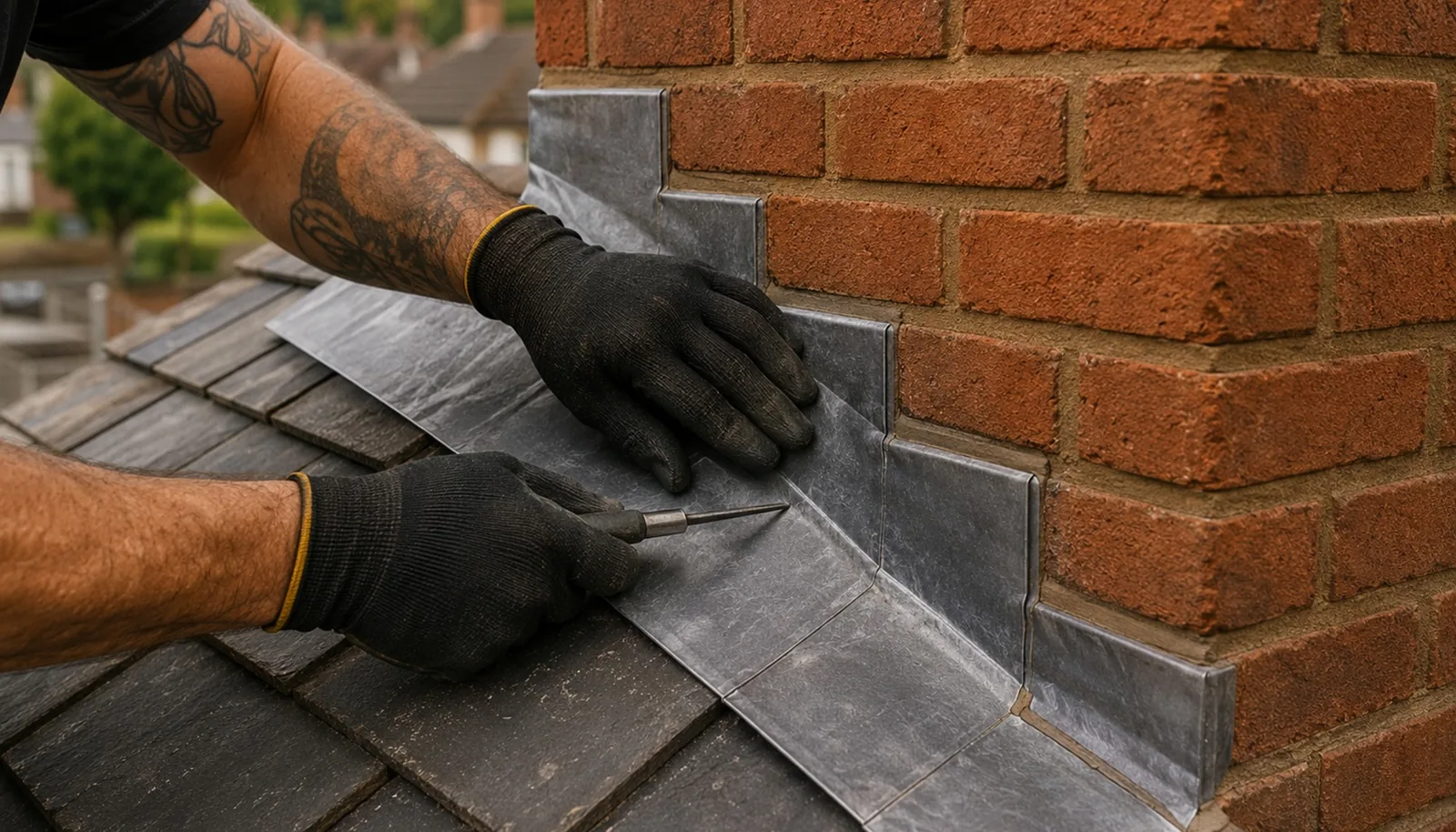
Overflowing gutters, failed leadwork and open masonry can create marks that appear to be a roof-covering fault. The roofline and wall below should be considered where the evidence points that way.
Questions about roofing
Can you inspect a roof from photographs?
Photographs can identify visible damage, but they do not always show fixings, underlay, deck condition or safe access. An inspection may still be needed.
Can work be completed in rain or high winds?
Some work would be unsafe or technically unsound. Timing depends on the roof, access, materials and forecast.
Does a small repair need approval?
Many straightforward repairs do not, but larger replacement work, structural changes, listed buildings and some alterations may need Building Regulations or planning checks.
Do you remove moss with aggressive pressure washing?
Controlled methods should be chosen to avoid damaging coverings and forcing water beneath them. Access and the condition of the roof must be assessed first.
Show us the roof and the symptom
Send ground-level roof views, the internal mark if there is one, when it appears and any known repair history.