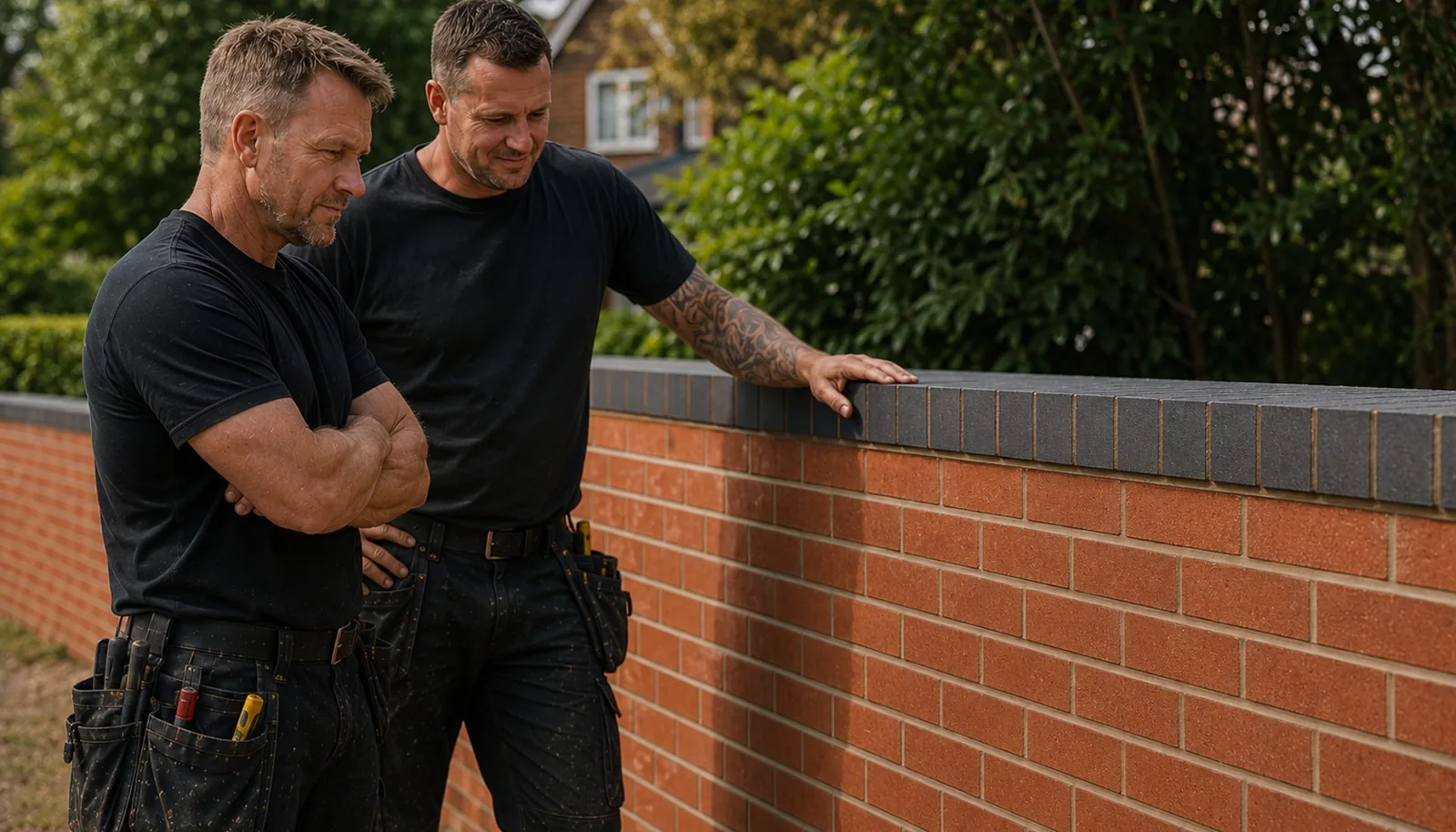
Brickwork, repointing and render repairs
The right repair depends on the brick or substrate, the existing mortar or finish, exposure and the reason the damage occurred.
Discuss masonry repairs · Send photographs
Open mortar joints, spalled bricks and cracked render allow weather to reach surfaces that were meant to be protected. The visible defect should be assessed alongside gutters, roof junctions, ground levels, openings and signs of movement.
Repointing
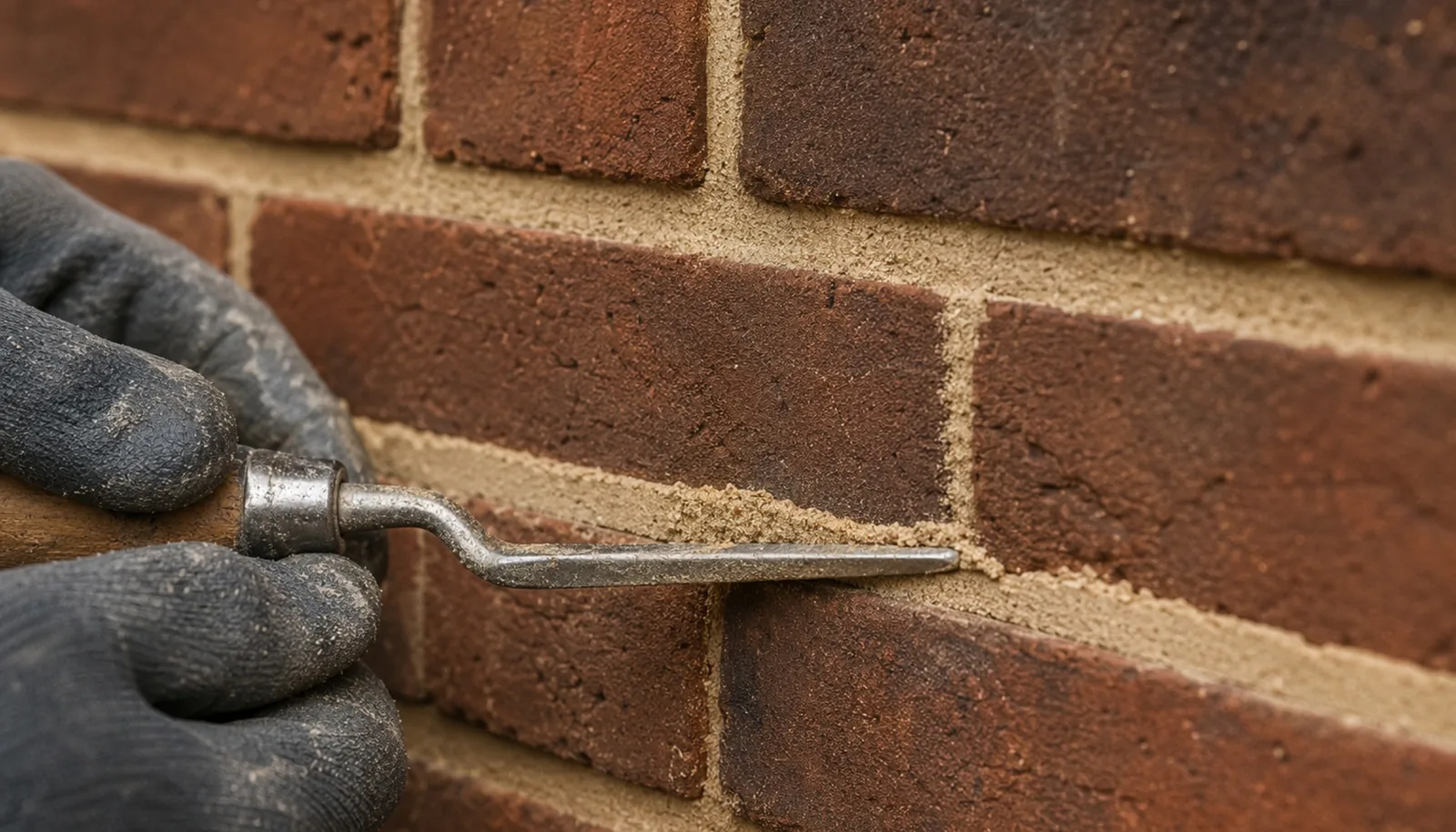
Repointing replaces failed mortar while preserving sound masonry. The old mortar needs to be removed carefully to a useful depth, loose material cleared and the new mortar placed and finished without smearing the brick faces.
Mortar should be compatible with the masonry and exposure. A hard modern mix can be unsuitable for some older or softer walls.
Cracked and damaged brickwork
Isolated spalled or broken bricks may be replaced where the surrounding wall is stable. Crack shape, width, position and change over time matter. Cracking above openings, stepped cracks and recurring movement may need specialist structural assessment rather than cosmetic filling.
Render repairs
Local render can fail because of impact, movement, water behind the finish, poor preparation or an incompatible previous patch. Tapping, edges, cracks and the condition of the substrate help determine whether a local repair will bond properly.
The repair needs suitable weather and should be allowed to cure or dry before coating.
Water sources around the wall
Before repairing the finish, check:
- gutters and downpipes above;
- roof or flashing junctions;
- cracks around windows and openings;
- defective sills, copings or caps;
- paving or soil levels at the base;
- leaking external pipework;
- whether the mark changes after rain.
Repointing beneath a persistent overflow treats damage but not the cause.
Guttering, fascias and soffits · Common causes of damp-looking stains
Older, listed and unusual buildings
Traditional walls may use lime-based mortars and breathable finishes. Listed buildings or changes affecting character may need consent or conservation advice. Materials should not be selected by colour alone.
Preparation and finished appearance
A good repair respects joint width, brick bond, texture and existing lines. Replacement bricks should be chosen for size, type and appearance as well as strength. Render patches should be feathered or jointed appropriately rather than left as an obvious hump over loose material.
Questions about masonry repairs
Does every crack mean structural movement?
No. Cracks can come from shrinkage, thermal movement, impact or local failure. Pattern, position and change matter. Significant or progressive movement needs appropriate specialist assessment.
Can only the worst pointing be replaced?
Sometimes. The extent should follow genuinely failed joints, but isolated hard patches and widespread deterioration can affect how sensible local work is.
Will new mortar match immediately?
Fresh mortar often changes as it cures and weathers. Aggregate, binder, tooling and moisture all influence the final appearance.
Can render be painted straight after repair?
Not automatically. The repair needs to cure and dry according to the material and conditions before a suitable coating is applied.
Show the whole wall as well as the defect
Send a full elevation, closer details, the area above and the base of the wall. Tell us if the damage changes after rain or has moved over time.