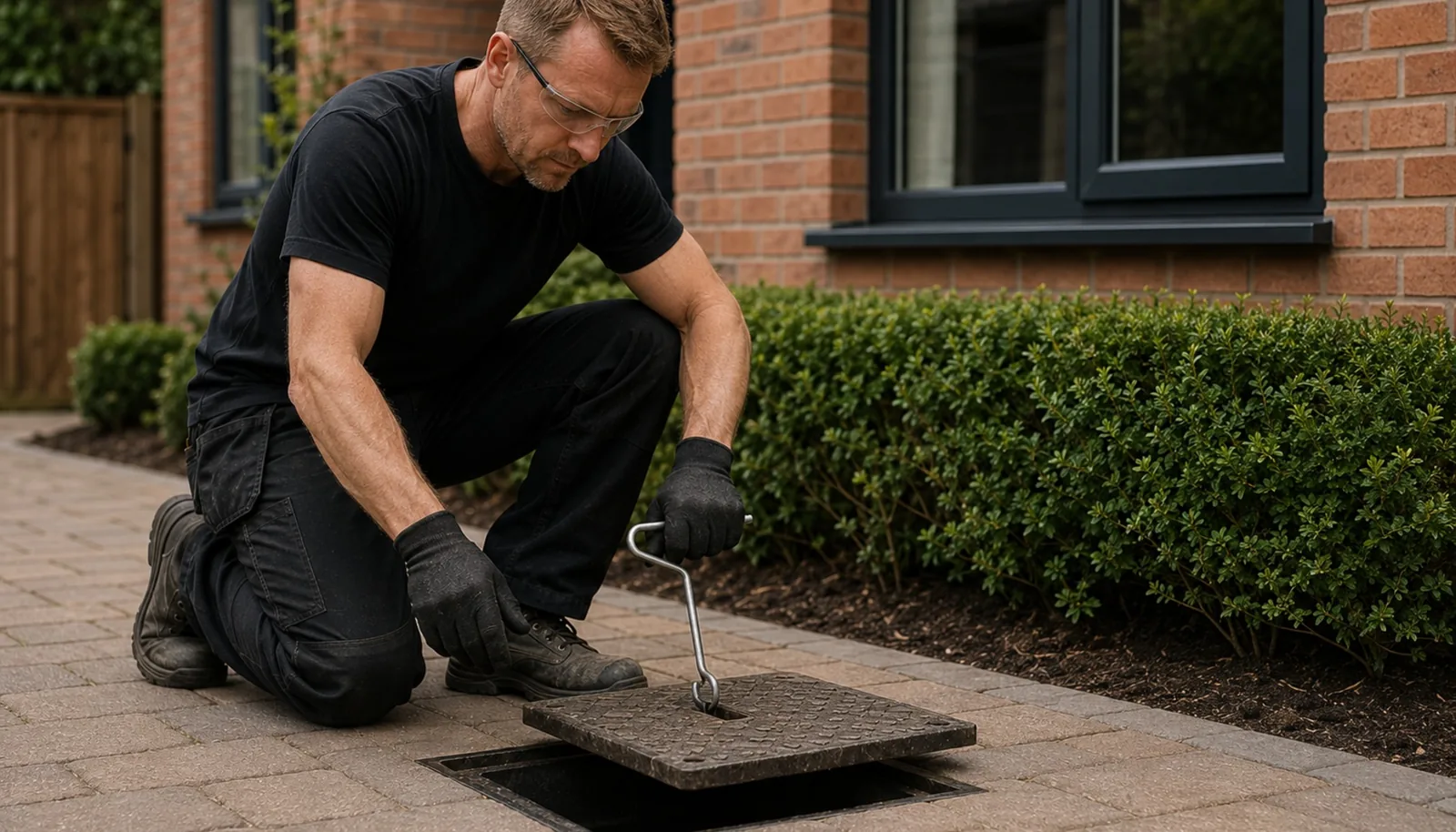
Groundworks and external drainage
Standing water can come from a blockage, failed pipe, poor level, overwhelmed outlet or a surface that sends water to the wrong place.
Report a drainage problem · Request an inspection
G&M Property Maintenance undertakes selected local groundworks and external drainage repairs, including inspection of accessible areas, channel or gully work and repair of identifiable damaged drainage runs where the scope is appropriate.
Complex drainage design, public sewers, deep excavations, contamination and specialist surveys may require other competent contractors or approvals.
Start with the pattern
Useful questions include:
- Does water collect only after heavy rain or after ordinary use?
- Does it clear slowly or remain for days?
- Is one gully affected or several?
- Are there smells, movement or subsidence nearby?
- Has paving recently been added or levels changed?
- Is the problem foul water, surface water or unclear?
- Has a chemical or mechanical treatment already been used?
Foul and surface-water drainage should generally remain separate. The route and ownership need to be understood before new connections are proposed.
External drainage problems
The focused service covers common warning signs, safe initial inspection and the point at which specialist equipment or a drainage contractor is needed.
External drainage problems · Warning signs of external drainage problems
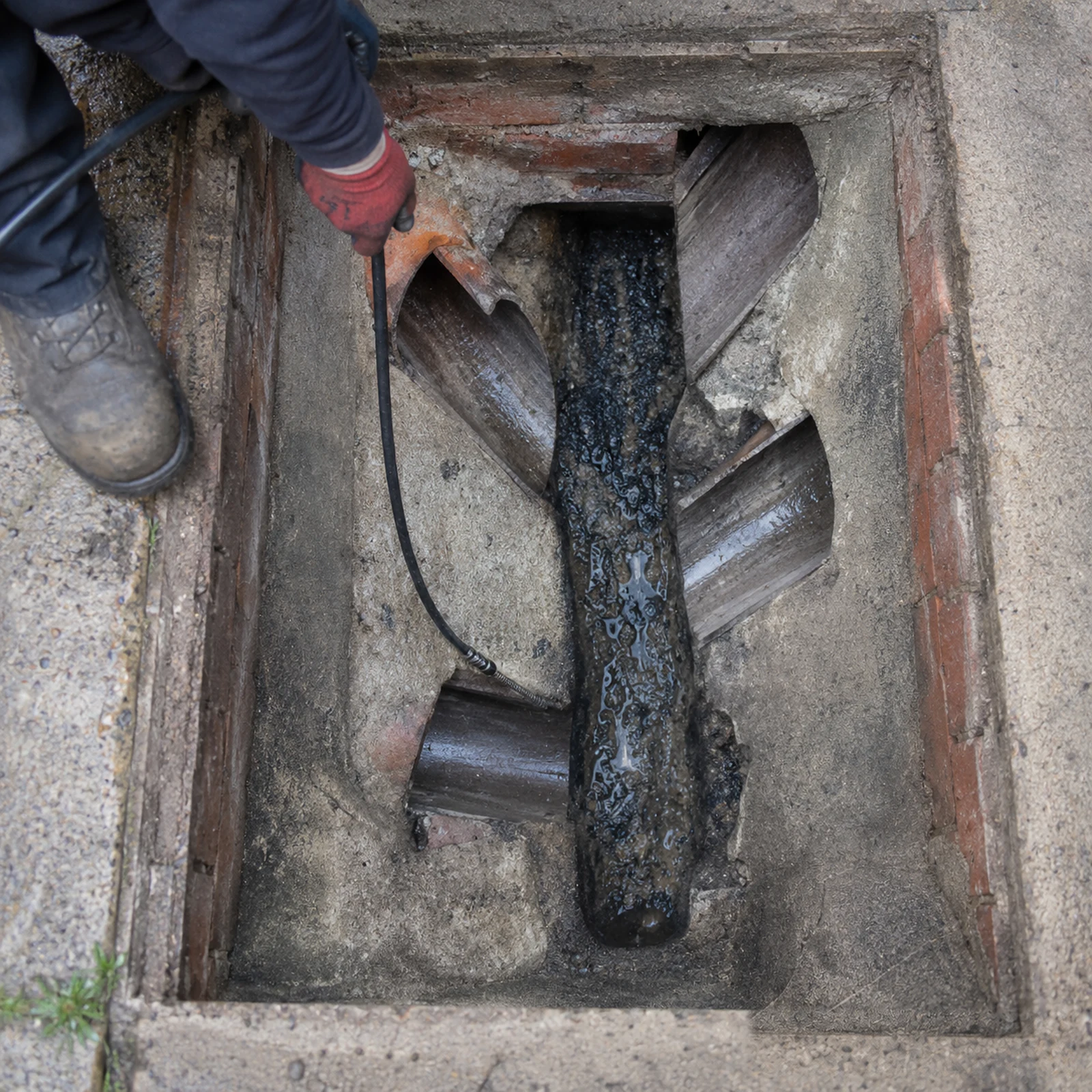
Channels, gullies and surface water
A channel drain can collect water at a threshold or edge, but it still needs a suitable outlet and correct levels. A new channel connected to a blocked or unsuitable system simply moves the visible puddle.
Damaged underground pipework
Local excavation may reveal cracked, displaced or poorly supported pipework. The depth, route, surrounding services, ownership and connection type affect whether the work is within scope.
Excavation should not begin from guesswork where gas, electricity, water or communications services may be present.
When specialist investigation is needed
CCTV surveys, jetting, root ingress, repeated internal flooding, shared drains, public sewers, deep collapse and drainage redesign can require specialist equipment and reporting. G&M does not claim these capabilities unless they are separately verified.
Questions about drainage
Can you clear every blocked drain?
No. A simple accessible obstruction may be different from a collapsed, shared or public drain. The first inspection helps identify the correct route.
Can I keep using chemical drain cleaner?
Do not mix products. Tell anyone attending what has already been used, because residues can create a safety risk.
Why does a channel drain still overflow?
The channel, outlet or downstream connection may be blocked, undersized or poorly aligned. Water may also be arriving faster than the system can discharge.
Can a new patio connect rainwater to any nearby drain?
No. Foul and surface-water systems have different purposes, and approvals or a proper drainage design may be needed.
Show the water route
Send photographs during and after rainfall if safe, plus the affected gully, channel, paving levels and nearby downpipes.