Brickwork and masonry
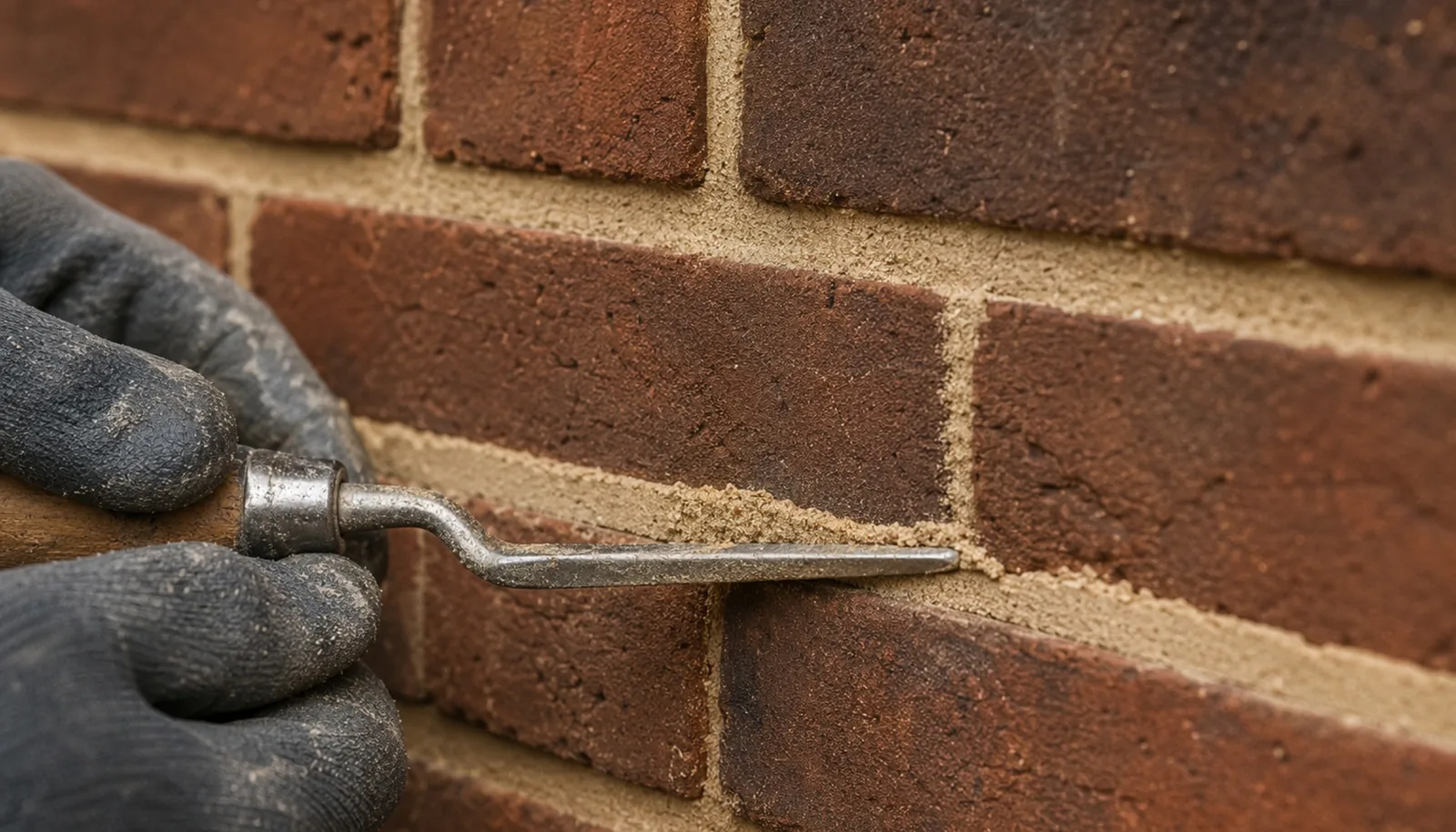
Good repointing removes genuinely failed material, fills the joint properly and leaves the brick faces clean.
Ask about repointing · Read when pointing needs replacing
Mortar joints help shed weather and accommodate some movement within masonry. When joints become loose, deeply recessed or open, water can reach the wall more easily and brick edges can lose support.
Repointing is not painting a thin layer over the face of the old joint. The failed material needs to be removed to a useful depth so the new mortar can bond and be compacted.
Signs that deserve assessment
- mortar that can be brushed or picked out easily;
- open joints around brick edges;
- deep recession exposing the top or bottom of bricks;
- cracks running through the mortar;
- previous hard patches beside softer original mortar;
- damp marks below repeated gutter overflow;
- loose bricks or damaged faces.
Colour variation alone does not prove failure.
Preparation
Raking out should avoid damaging brick arises and faces. Dust and loose material are removed, and the joint is prepared for the selected mortar. Mechanical tools require care; an aggressive disc can widen joints and permanently scar the wall.
Mortar compatibility
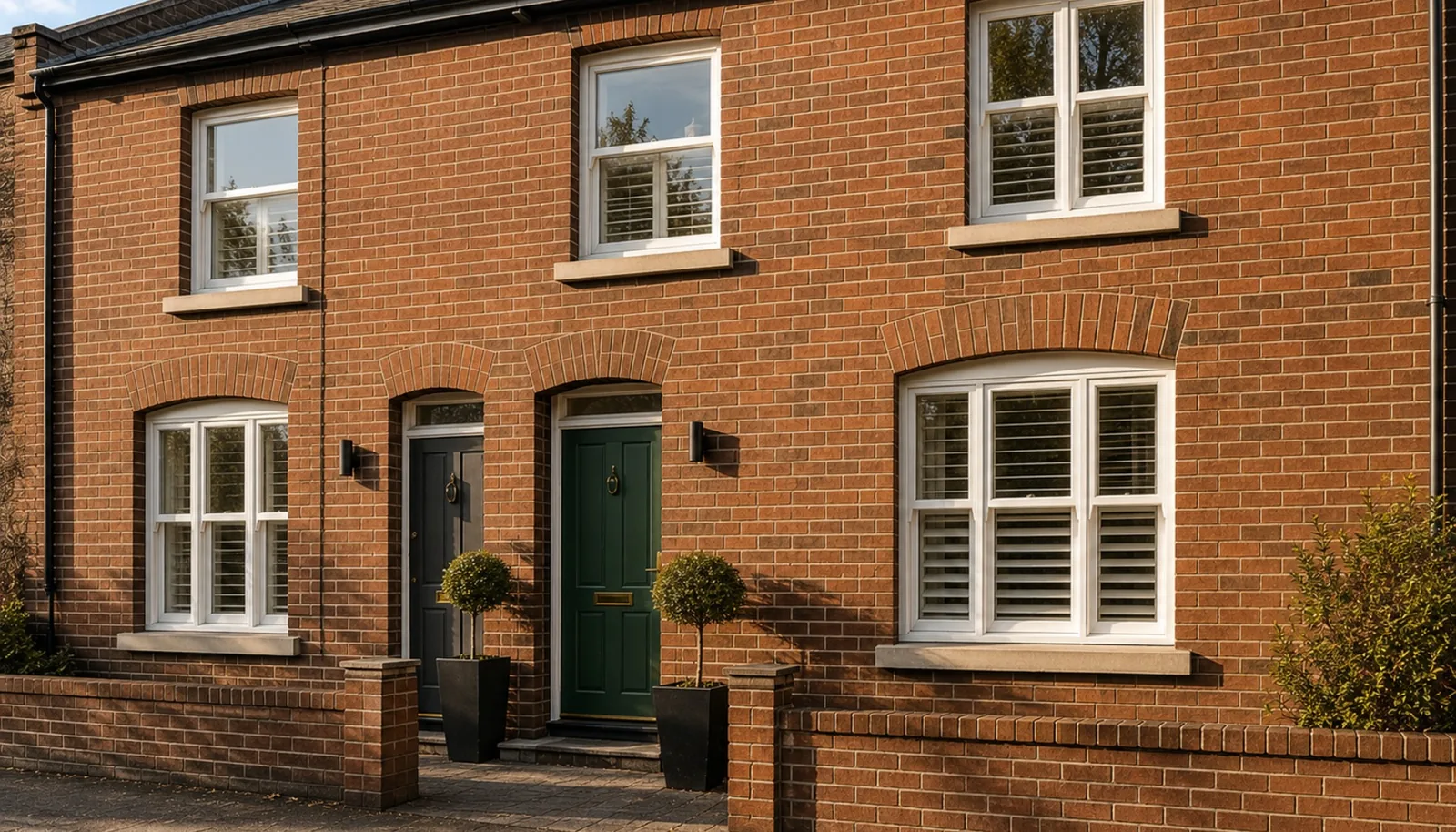
The mortar must suit the masonry, age and exposure. Older and softer brickwork may need a more vapour-open, sacrificial mortar rather than a dense hard mix. Matching involves binder, aggregate, texture and joint finish—not just dye.
Historic or listed buildings may require specialist conservation advice and consent checks.
Filling and tooling
Mortar should be placed firmly through the prepared joint rather than spread across the surface. The finished profile should suit the wall and weathering. Brick faces should be left clean without smeared mortar or harsh acid cleaning.
Weather and curing
Hot sun, wind, frost and heavy rain can affect fresh mortar. Protection and curing should suit the mix and conditions. Work should not be rushed simply to cover a large area in one day.
Deal with the water source
If gutters, copings, sills or roof details are saturating the wall, repair those causes as part of the maintenance plan.
Questions about repointing
Does the whole wall need repointing?
Not always. The extent should follow failed joints, but isolated repairs must still join sensibly with the surrounding mortar.
Why can hard cement mortar damage soft bricks?
A mortar stronger and less permeable than the masonry can concentrate moisture and weathering at the brick faces or edges.
Will the colour match on day one?
Fresh mortar changes as it cures and dries. A sample and realistic expectation are useful on prominent areas.
Can repointing stop every damp mark?
No. Roofs, gutters, plumbing, condensation and ground levels may also be involved. Diagnosis should precede a large repointing job.
Show us a full wall and close joints
Include openings, roofline, base and any areas affected by rainwater.