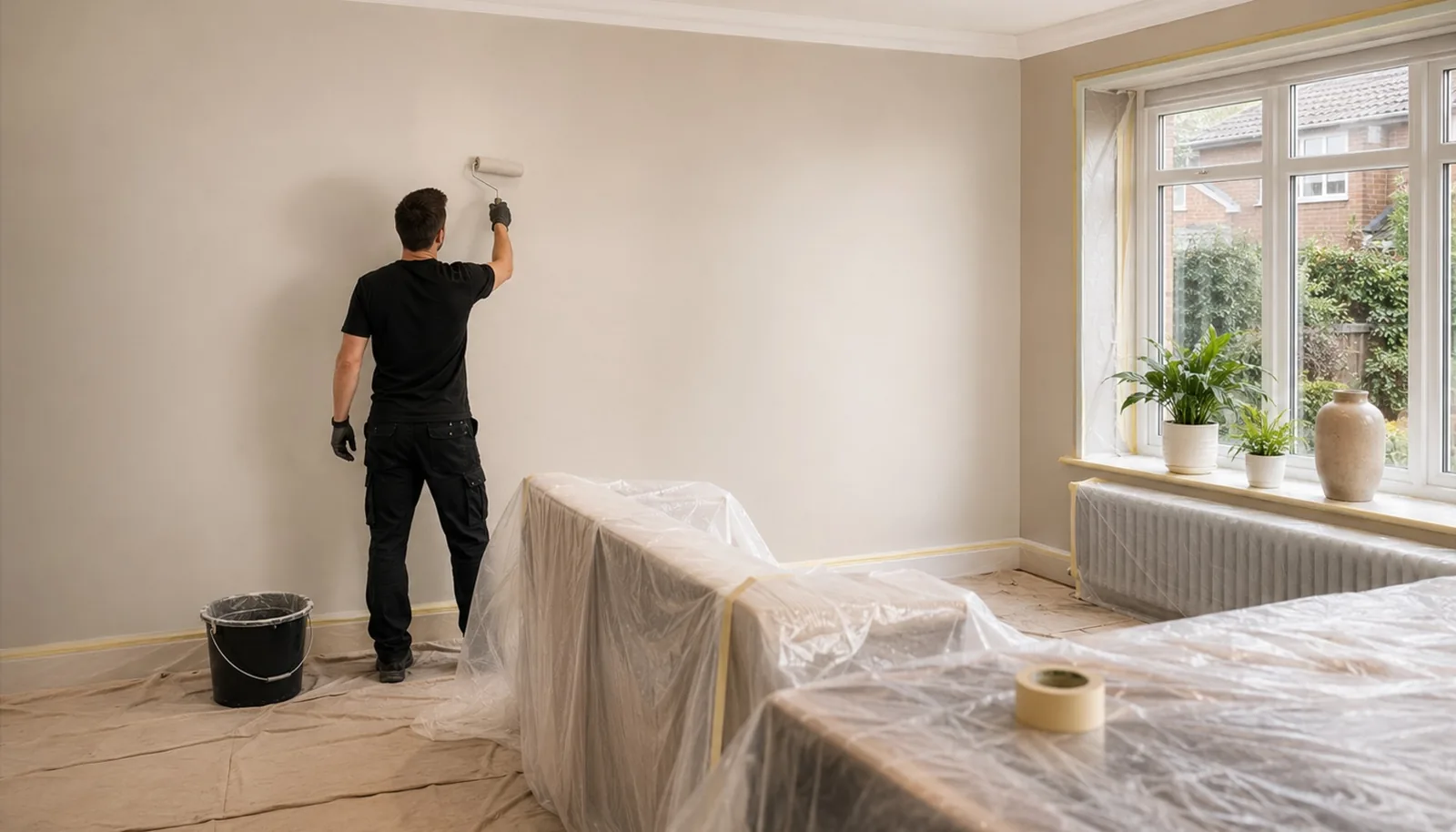
Painting and decorating
Cleaning, repairs, drying and preparation come before the final colour. Repeated staining or peeling should be investigated, not simply covered.
Discuss decorating · Request a quote
G&M Property Maintenance undertakes interior and exterior decorating as part of repair, maintenance and improvement work. The scope can range from a room refresh to making good after repairs or renewing weathered exterior finishes.
Interior painting and decorating
Interior work may include walls, ceilings and suitable woodwork, with protection for floors, furniture and fittings. Cracks, loose plaster, stains and damaged sealant should be dealt with in the correct order.
Exterior painting
Exterior surfaces face rain, sunlight, frost and movement. The coating must suit the render, masonry or timber, and the substrate must be sound enough to receive it. Weather and drying conditions matter.
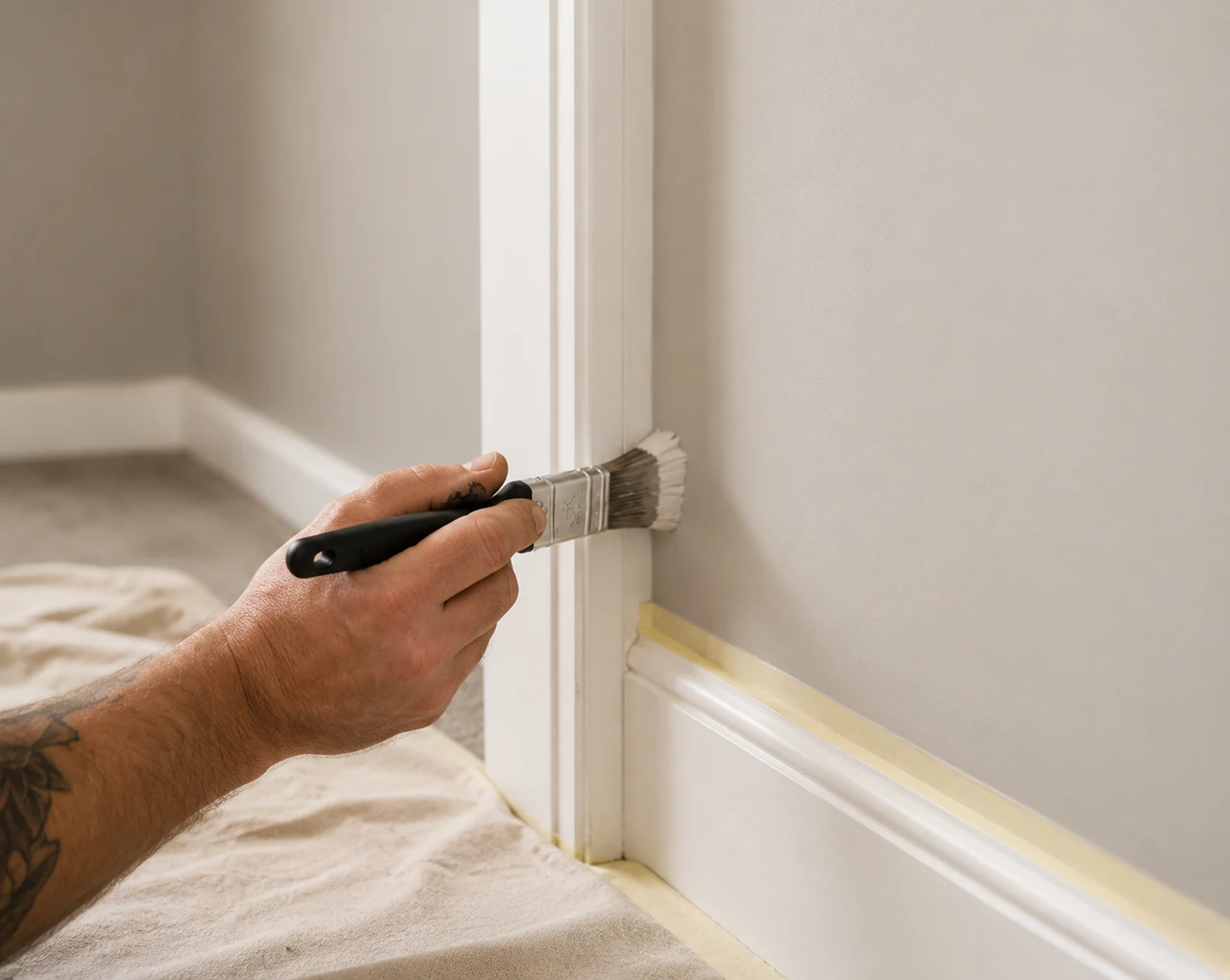
Preparation that earns its keep
Depending on the surface, preparation may include:
- washing and removing contamination;
- scraping loose or flaking coatings;
- sanding or keying sound paint safely;
- repairing cracks, holes or damaged edges;
- treating local surface defects with compatible products;
- sealing stains only after the cause is resolved;
- priming bare or repaired areas;
- protecting floors, windows, fittings and adjoining finishes.
Older paint can contain lead. Dry sanding or uncontrolled heating of unknown old coatings can create hazardous dust or fumes. The method should be chosen with the age and condition of the property in mind.
Moisture first, paint second
A fresh coat will not cure an active roof leak, gutter overflow, plumbing defect or persistent condensation. If a stain is recent, changing or damp to the touch, the cause should be investigated before decoration.
Colour, sheen and practical use
The right finish depends on the room, light, cleaning needs and existing surface. Kitchens, bathrooms, busy hallways, rental properties and commercial spaces may need different practical choices.
Colour samples can also look different as light changes. The final specification should identify the product type and areas included rather than rely on a colour name alone.
Decorating occupied and empty property
Occupied work needs discussion about furniture, room access, ventilation and drying. Empty rental or commercial spaces can often be prepared more efficiently, but underlying defects should not be hidden to meet a quick handover date.
Questions about decorating
Can you paint over a water stain?
Only after the cause is dealt with and the area is sufficiently dry. The damaged surface may need repair and a suitable stain-blocking preparation before final coats.
Do all walls need a full skim before painting?
No. The required preparation depends on the finish expected and the condition. Local filling or patch plastering may be enough; badly uneven or failed surfaces may need more.
Can exterior painting be done in winter?
Some products allow a range of conditions, but cold, damp, rain and short drying windows can make the work unsuitable. Manufacturer guidance and the actual forecast matter.
Will you move all furniture?
Access and moving arrangements should be agreed in the scope. Fragile, valuable and personal items should normally be removed by the customer before work.