
Reactive property repairs
Tell us what is happening now, what part of the property is affected and whether water, loose materials or another immediate concern is still active.
Report a repair · Call 07891 904226
Reactive work begins with a fault that cannot simply be added to next season's list: water entering, a roof detail damaged after bad weather, a failed pipe, unstable fencing or another defect that is causing damage or preventing normal use.
Urgent does not mean guaranteed attendance at a fixed time. The response depends on availability, safe access, weather, daylight, the condition of the property and the nature of the problem. The first conversation should establish the real priority and the safest next step.
Make the area safe without taking unnecessary risks
Do not climb onto roofs, lean out of windows, enter unstable areas or open electrical equipment to investigate. Keep people away from loose materials and wet ceilings that are bulging or deteriorating.
If it is safe and obvious how to do so, a water supply can sometimes be isolated at an accessible stop tap. Do not interfere with gas appliances, gas pipework or electrical systems. For immediate danger, fire, suspected gas escape or an electrical emergency, use the appropriate emergency or specialist service.
Information that helps us judge the repair
Send:
- the postcode and property type;
- the exact room, roof slope, wall, fitting or outside area affected;
- what is happening now;
- when it began and whether weather is involved;
- a wider photograph and close-ups, taken from a safe position;
- whether the property is occupied;
- any safe isolation already carried out;
- access limitations and the best contact number.
A photograph of only the stain or puddle is rarely enough. The surrounding wall, ceiling, roofline, fitting or ground level can be more useful.
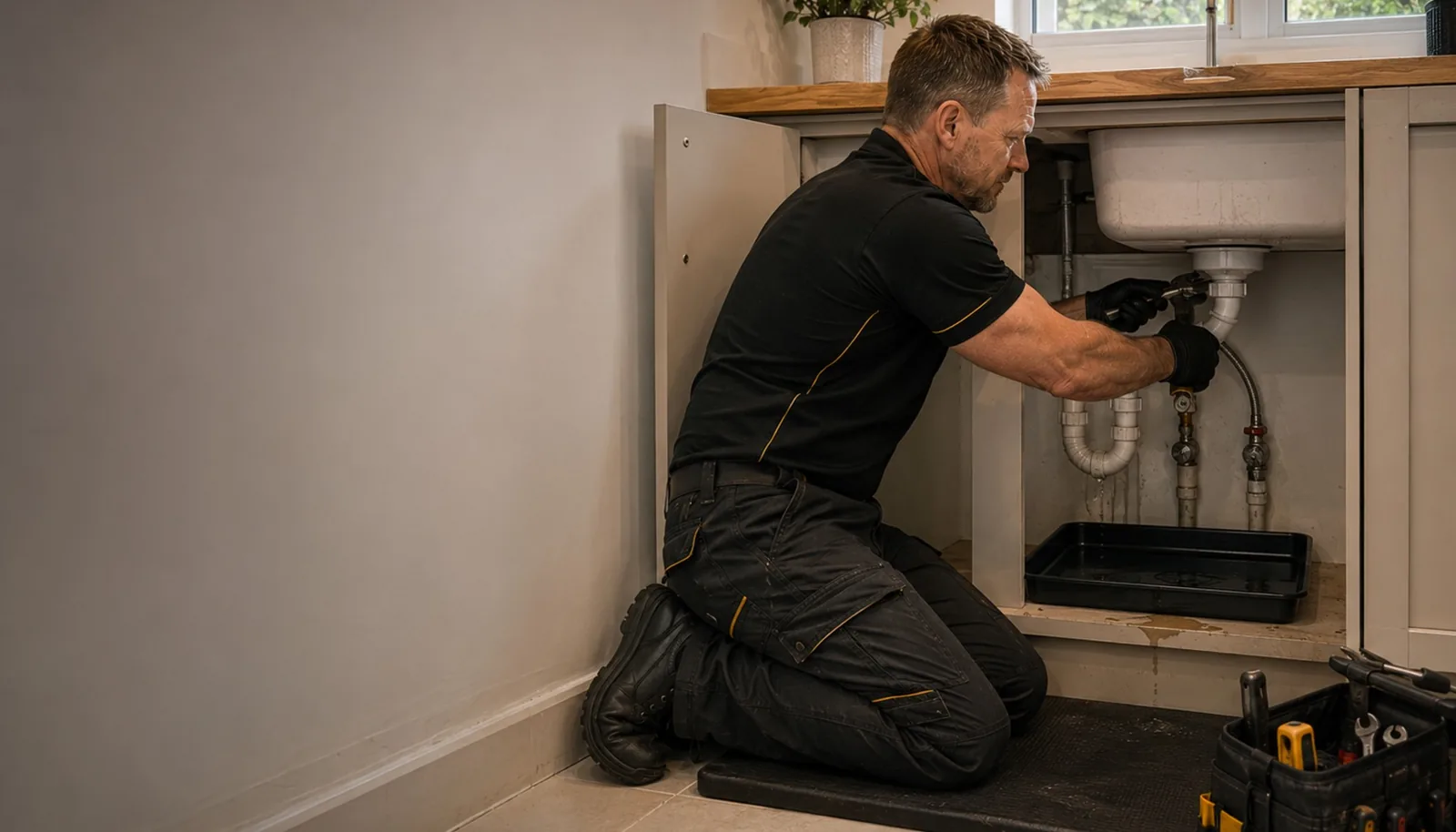
Temporary control and permanent repair are different
A temporary covering, isolation or short-term seal may be appropriate when a full repair cannot be completed safely or correctly at once. Bad weather, wet substrates, missing materials or the need for scaffolding can affect the timing.
Any temporary measure should be identified honestly. A permanent repair must deal with the defective component and the detailing around it, not simply hide the visible result.
Water can travel
The place where water appears is not always the point where it entered. It can run along roofing felt, timbers, pipework, ceilings or cavities before becoming visible. That is why the pattern, weather history and condition above or outside the mark matter.
After the immediate problem is controlled
Drying and making good should wait until the cause is dealt with and the area has had a reasonable chance to dry. Stained plaster, damaged decoration or swollen timber may need separate work. If the same symptom has happened before, tell us what was repaired and when.
Questions about reactive work
Do you offer a 24-hour emergency service?
No fixed round-the-clock attendance is advertised. Urgent enquiries are reviewed and prioritised subject to availability and safe working conditions.
Can you attend during heavy rain or high winds?
Some inspection or temporary work may be unsafe or ineffective in severe weather. The immediate advice and timing will depend on the defect and access.
Should I send a video?
A short video can help show active flow, movement or the wider area, provided it can be taken safely. Photographs are still useful because individual details can be examined.
Will the first visit always complete the repair?
Not always. The cause may need investigation, access equipment or materials not known from the initial report. We will explain whether the first stage is diagnosis, temporary control or the permanent repair.