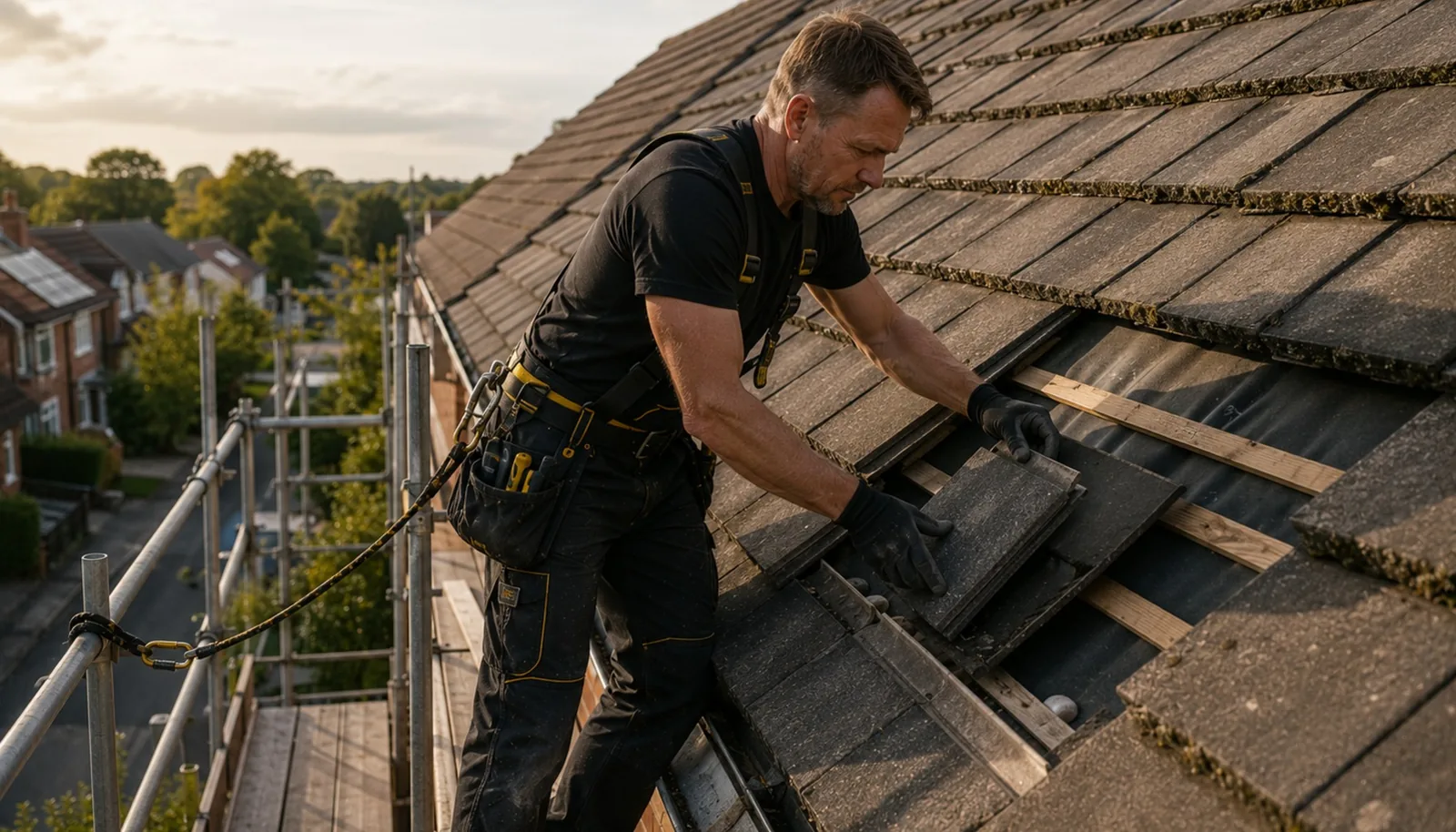
Urgent roofing
Do not climb onto the roof. Tell us whether water is active, what changed and whether loose material could fall.
Report urgent roof damage · Read warning signs
Urgent roof enquiries may involve missing coverings, storm damage, active water entry, loose ridge or verge materials and damaged temporary roofs. The immediate priorities are people, falling-material risk and avoidable water damage.
G&M does not advertise guaranteed 24-hour or same-day attendance. Work is reviewed and prioritised subject to availability, weather, daylight, safe access and the nature of the defect.
Keep away from the danger area
Do not:
- climb onto the roof or use an improvised ladder;
- stand beneath loose tiles, masonry or guttering;
- enter a loft where the structure or ceiling appears unsafe;
- touch wet electrical fittings;
- puncture a bulging ceiling while standing beneath it;
- attempt torch, resin or membrane repairs without the right system and conditions.
For immediate danger, fire, suspected gas escape or an electrical emergency, use the appropriate emergency or specialist service.
Useful information
Send the postcode, property type, time the damage occurred and:
- wide ground-level views of the roof;
- close detail only if it can be taken safely;
- the internal ceiling or wall mark;
- whether the leak changes with wind direction or rainfall;
- whether materials are on the ground;
- access limitations and occupancy.
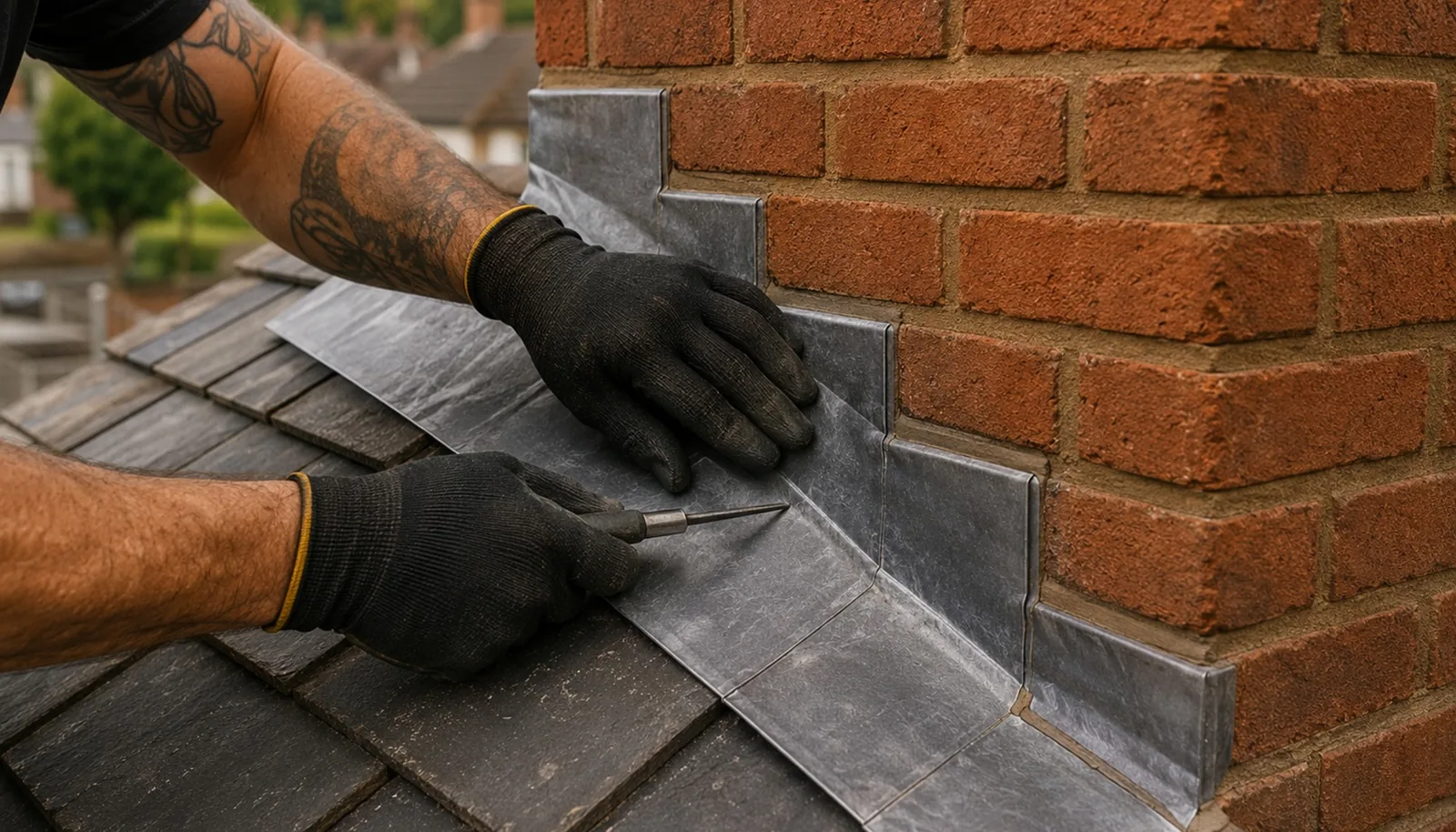
Temporary weatherproofing
A secure temporary covering or local control may be the safest first stage when the permanent repair requires scaffolding, dry weather, matching materials or further inspection.
Temporary work should be robust enough for its intended short use and clearly described as temporary. It needs later review; a sheet placed loosely over the roof is not a professional weatherproofing plan.
Permanent repair
Once safe access and conditions allow, the roof should be inspected around the defect. The final scope may involve tiles or slates, underlay, battens, flashing, ridges, verges, flat-roof membrane or adjoining rainwater goods.
Questions about urgent roofing
Can you work during a storm?
Work may be unsafe or ineffective in strong wind or heavy rain. The first stage may be advice, isolation of an area or attendance when conditions improve.
Will a temporary cover stop all water?
It is intended to reduce entry until permanent repair, but performance depends on damage, access and weather. It is not the final repair.
Should I claim on insurance first?
Check your policy and notify the insurer promptly where relevant. Keep photographs and avoid disposing of damaged materials until you understand any evidence requirements.
Does an internal stain mean the roof is still leaking?
It may remain visible after the cause is repaired. Drying and monitoring help distinguish old staining from new water.