
External drainage
Recurring standing water or a slow gully may be a simple obstruction—or evidence of a damaged, overloaded or unsuitable system.
Report a drainage problem · Read the warning signs
G&M Property Maintenance can carry out initial assessment and selected repair of accessible external drainage components where the route and defect are within scope. Not every blockage or collapse is suitable for general groundworks.
Useful warning signs
- a gully that clears slowly;
- water returning after ordinary use;
- repeated standing water beside a wall;
- smells around an inspection chamber;
- movement or a dip in paving above a drain run;
- a channel drain overflowing despite being clear;
- soil washing into one point;
- several fixtures or gullies affected at once.
Foul and surface water
Foul drainage carries used water from sanitary fittings. Surface-water drainage carries rainwater from roofs and hard surfaces. These systems generally need to remain separate.
If the affected route is unclear, do not make a new connection by assumption.
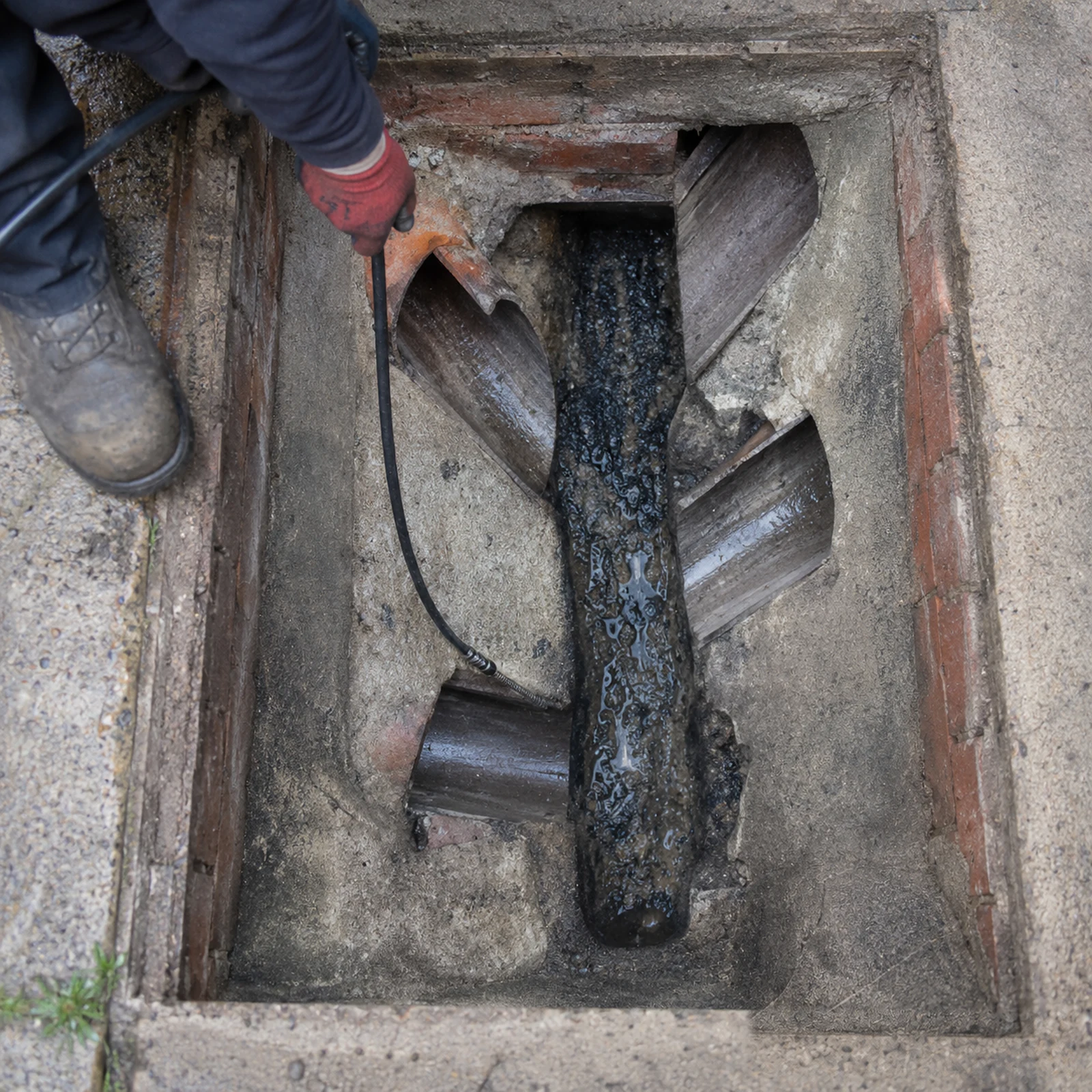
Safe initial checks
An accessible cover may be inspected with suitable precautions. Heavy or damaged covers, deep chambers, contaminated water and confined spaces create risk. Do not enter a chamber.
Tell us if drain chemicals, rods or other treatments have already been used.
Local repair
A controlled excavation may reveal a cracked, displaced or poorly supported pipe. Repair should use compatible components and restore bedding and backfill so the pipe is not left carrying ground load incorrectly.
The location of other services must be considered before digging.
When a drainage specialist is needed
Specialist help may be required for:
- CCTV surveying and formal reports;
- high-pressure jetting;
- repeated blockage with no visible cause;
- deep or extensive collapse;
- shared drains or public sewers;
- root ingress;
- contaminated or hazardous waste;
- design of new soakaways or larger surface-water systems.
Questions about external drainage
Can rods clear every blockage?
No. Misuse can damage pipework or push an obstruction further. The route and likely cause matter.
Who is responsible for the drain?
Ownership can depend on whether the pipe serves one property, is shared or forms part of a public sewer. This may need checking with the water company or property records.
Why has paving sunk above a drain?
Leaking pipework, poor backfill or unrelated ground movement may be involved. The surface and drainage run should be considered together.
Can rainwater connect to a foul drain?
Do not assume it can. Drainage type, existing system and approvals must be considered.
Show the chamber, gully and surrounding levels
Add photographs during the problem if safe, and explain whether rain or use triggers it.