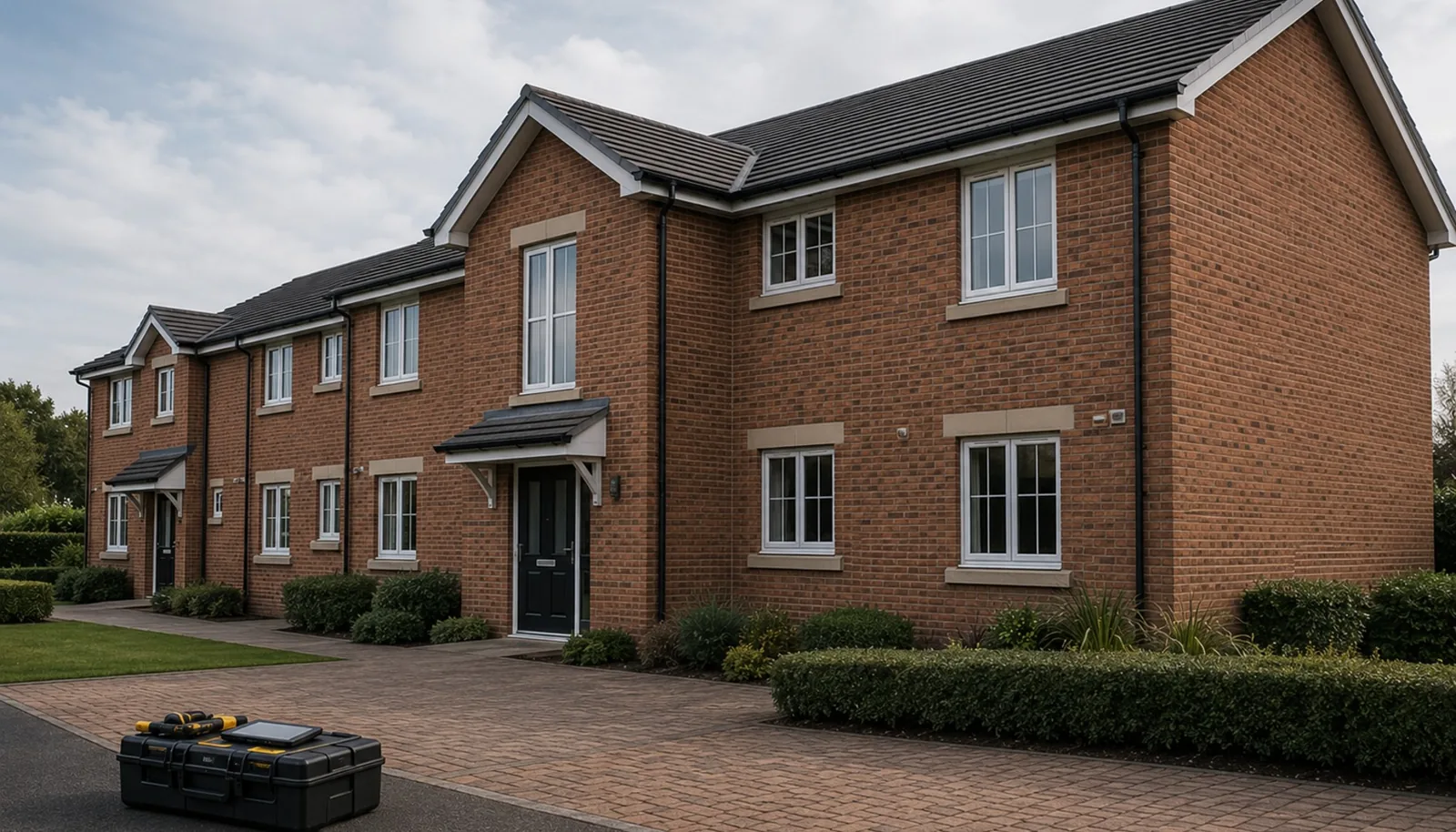
Planned property maintenance
A practical maintenance plan focuses first on water, safety and defects that can spread—then deals with appearance and improvement in the right order.
Ask about planned maintenance · View seasonal guidance
Buildings do not normally fail all at once. Mortar opens gradually, coatings thin, gutters collect debris, timber finishes weather and small movements appear at joints and edges. Planned maintenance gives you the chance to choose timing, access and materials before the work is driven by an active leak or sudden failure.
Begin with water
Water is one of the most common links between separate maintenance problems. A blocked outlet can overflow onto a wall. Failed pointing can allow repeated wetting. Loose roof details can mark ceilings or timbers. Poor falls around paving can direct rainwater towards the building instead of away from it.
A useful inspection therefore considers:
- roof coverings, junctions and visible damage;
- flat-roof outlets and areas where water may pond;
- gutters, joints, downpipes and discharge points;
- cracked render, open mortar and damaged bricks;
- sealant around vulnerable exterior junctions;
- paths, patios, gullies and channel drains;
- internal marks that may show an external or plumbing fault.
Put safety and access next
Loose paving, unstable fencing, damaged steps and deteriorated external timber can create avoidable hazards. Planned work also allows the right access equipment to be arranged rather than expecting a quick ladder visit to solve every roofline problem.
Work at height, confined drainage work and suspected asbestos require proper assessment. Planning makes those decisions easier.

Protect sound materials
Exterior paint and timber coatings work best when they are renewed before the underlying surface has deteriorated badly. Repainting cannot restore rotten timber or solve moisture trapped behind a coating. Preparation and local repairs should come first.
Group work in a sensible sequence
The order matters. Roof and gutter repairs should usually precede internal making good. Damaged render should be repaired and allowed to settle or dry as appropriate before it is decorated. Drainage and levels should be considered before a patio is relaid.
A staged plan might separate:
- active water entry and immediate hazards;
- repairs that prevent further deterioration;
- preparation and making good;
- decoration and improvement;
- routine checks at an appropriate later interval.
Planned maintenance for landlords
For rental properties, planned visits can reduce repeated access and help organise work between tenancies. Records should identify what was checked, what was repaired and what remains under observation. Statutory gas, electrical, fire-safety or other regulated checks must still be arranged with the appropriate competent specialists.
Landlord property maintenance · Organising landlord maintenance
Planned maintenance for commercial premises
Businesses often need work organised around opening hours, shared access, customers and noise-sensitive areas. A planned list gives time to agree isolation of work areas, deliveries, protection and whether a repair can happen in one visit or needs stages.
Questions about maintenance planning
Is this the same as a full building survey?
No. A maintenance inspection is limited to the agreed areas and what can be seen or reached safely. Structural, asbestos, drainage design and other specialist matters may need separate investigation.
How often should a property be checked?
There is no single interval for every building. Exposure, trees, roof type, age, tenancy changes and previous defects all matter. Some simple checks are sensible seasonally; other work is reviewed when a known coating or component is nearing the end of its useful condition.
Can I begin with photographs and a list?
Yes. A list helps establish priorities, although roofs, drainage, movement and recurring water problems often need inspection before a reliable scope can be agreed.
Will planned maintenance prevent every emergency?
No. Storm damage and sudden failures can still occur. Planning reduces avoidable deterioration and improves the chance of finding problems while they are manageable.
Build a useful maintenance list
Send the property type, address area, affected parts and any known history. We can help separate urgent repairs from planned work and improvement.