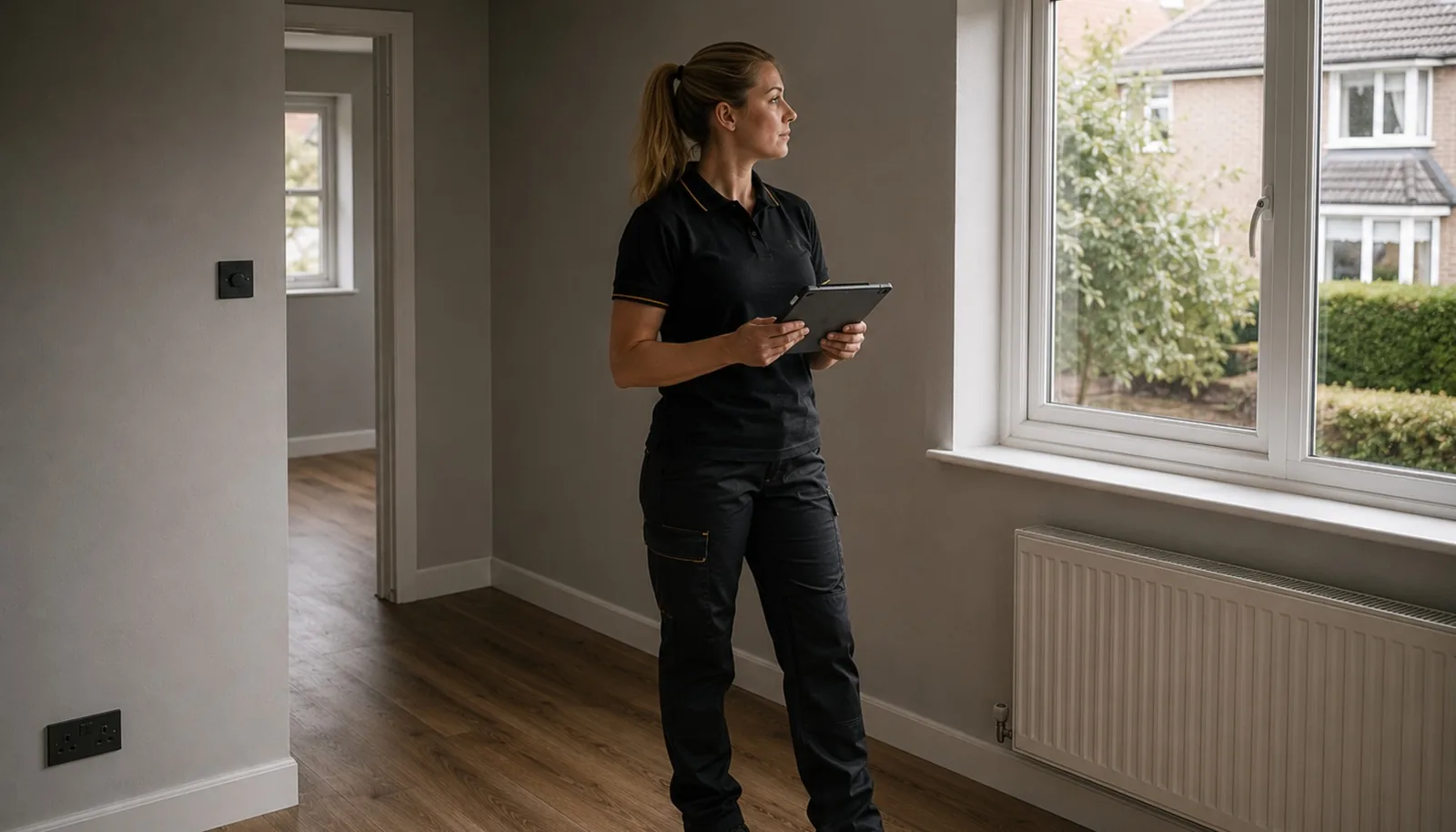
Landlord maintenance
Between tenancies, repairs and decoration can be sequenced properly without repeatedly disturbing an occupant.
Send the property schedule · View landlord maintenance
An empty property creates a useful window for inspection, grouped repairs and making good. It should not become a race to paint over staining or fill cracks without understanding why they appeared.
G&M Property Maintenance supports selected end-of-tenancy repairs and refresh work within the approved service scope.
Begin with a room-by-room schedule
Record each item by location and mark:
- active water or safety concerns;
- defects affecting security or normal use;
- repairs that must precede decoration;
- items of ordinary wear;
- damage requiring separate authorisation;
- specialist gas, electrical, fire-safety or asbestos work.
Photographs should show the item and surrounding area. A single wide view of each room also helps avoid duplicate descriptions.
Repair causes before finishes
Roof, gutter, plumbing, drainage and exterior defects should be dealt with before damaged plaster and decoration. Wet materials need a realistic drying period.
Reactive property repairs · Common causes of damp-looking stains
Typical maintenance items
Subject to condition, a grouped schedule may include:
- local plaster and making-good repairs;
- interior decorating;
- damaged sealant and minor bathroom or kitchen maintenance;
- sticking doors, skirtings and trims;
- leaking taps or running toilets;
- fence, gate and garden tidying;
- roofline, path or exterior defects;
- general snagging before handover.
Access and authorisation
Confirm that the property is legally available for access and who can approve the work. Keys, alarm details and access codes should be handled securely, not left in an ordinary open message.
If agents, landlords and outgoing tenants are all involved, one person should hold the authorised schedule.
Specialist safety work
G&M does not provide electrical or gas certification. Statutory checks and regulated safety work must be arranged with the appropriate competent contractors. General maintenance records do not replace certificates.
Handover
Completion should identify what was repaired, what has been decorated, any area still drying and any specialist work outstanding. Genuine defects should not be obscured from the incoming tenant.
Questions about end-of-tenancy work
Can you quote from a checkout report?
A clear current report is a useful start, but access, quantities and underlying condition may need inspection.
Can the whole list be completed in one visit?
It depends on scope, drying time, materials and specialist stages. A realistic programme is better than promising everything at once.
Can you decide whether damage is tenant liability?
No. G&M can describe condition and work; liability is for the landlord, agent and tenant to determine under the tenancy and evidence.
Can the new tenancy begin immediately after painting?
Drying, ventilation, odour and completion of all safety work need considering. Do not assume the room is ready because the surface feels dry.
Send the schedule before the diary fills
Include the proposed access date, handover target, postcode, property type and full repair list.