Decorating guidance
Paint can colour a surface, but it cannot make damp, loose, dirty or badly repaired material sound.
Discuss decorating work · View painting services
A durable finish depends on the surface beneath it. Preparation may take longer than application because it deals with adhesion, movement, moisture, contamination and the small details that remain visible under the final coat.
Start with the cause, not the colour
Before decorating, check whether staining, peeling or cracking results from:
- active water entry;
- plumbing leakage;
- condensation or poor ventilation;
- movement or damaged plaster;
- failed exterior details;
- previous coating incompatibility;
- grease, mould, dust or residue.
Decorating over an active defect hides evidence briefly and can make later repair more disruptive.
Protect the room and organise the sequence
Move or cover furniture, protect floors and isolate dusty work from occupied areas as far as practical. Remove or mask appropriate fittings only when this can be done safely.
A sensible sequence is:
- repair the cause of damage;
- allow suitable drying;
- remove loose material;
- clean and prepare;
- repair the surface;
- sand and dust down;
- prime or seal where required;
- apply the finishing system.

Walls and ceilings
Loose paint should be removed back to a sound edge. Cracks and holes need a repair suited to their depth and cause, followed by smoothing and dust removal.
New plaster must be sufficiently dry and prepared for the specified coating. Water staining may need an appropriate stain-blocking treatment only after the source has been fixed and the substrate has dried.
Woodwork
Sound painted timber normally needs cleaning, deglossing and local repair. Bare or exposed timber may need suitable primer. Open joints, decay and persistent moisture need repair before finishing.
Edges, hinges, seals and moving parts require care. Paint should not prevent a door, window or latch from operating properly.
Exterior masonry
Exterior surfaces need to be stable, clean and reasonably dry. Flaking coating, loose render, algae and salts cannot simply be rolled over.
The paint system should suit the substrate and previous coating. Moisture trapped behind an unsuitable finish can lead to blistering and repeated failure.
Sanding and dust control
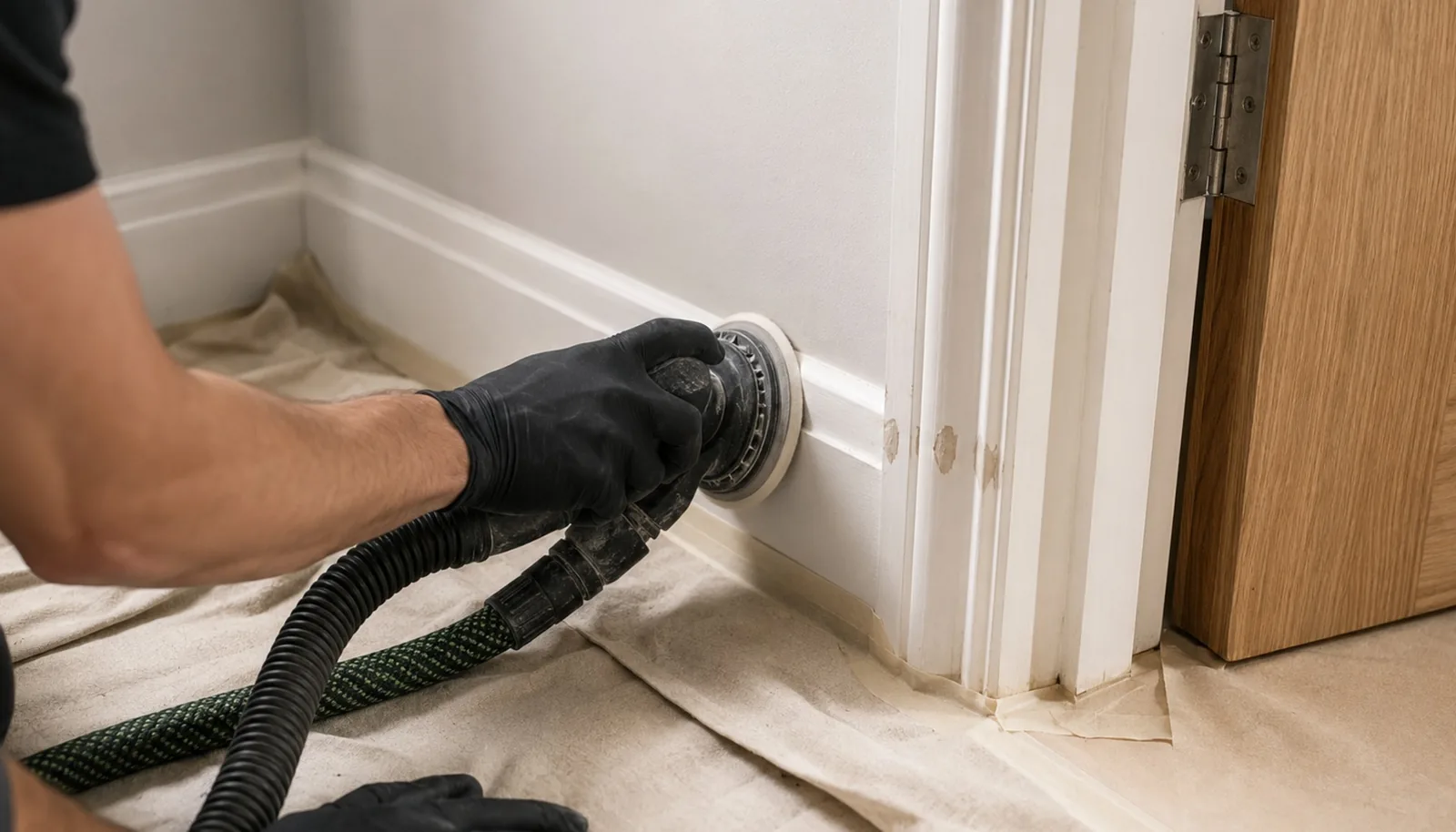
Sand only as much as required to remove defects, feather sound edges and provide a suitable key. Excessive sanding can damage profiles and create unnecessary dust.
Older paint may contain lead. Work that disturbs it requires appropriate assessment, control and hygiene; do not dry-sand suspect coatings casually.
Cleaning matters
Dust, grease and residue interfere with adhesion. Kitchens, bathrooms, hand-contact areas and external surfaces often need targeted cleaning before abrasion or coating.
Mould should not be painted over. Address the moisture conditions, follow suitable cleaning precautions and allow the surface to dry.
Primers and problem surfaces
A primer is selected for the substrate and condition, not used as a universal cure. It may be needed for:
- bare timber or metal;
- repaired patches;
- porous surfaces;
- isolated dry staining;
- adhesion to a difficult sound finish;
- protection appropriate to the material.
The manufacturer's preparation, coverage, drying and overcoating guidance remains important.
Signs that more repair is needed first
Pause decorating if there is:
- active dampness;
- soft or crumbling plaster;
- decayed timber;
- widening cracks;
- loose render;
- failed seals allowing water entry;
- a surface contaminated by an unknown substance.
What a useful decorating brief includes
Tell the contractor:
- which rooms or elevations are included;
- whether the property is occupied;
- known leaks, stains or previous failures;
- the condition of walls, ceilings and woodwork;
- access restrictions;
- whether colour or product decisions are already made;
- the finish expected and any exclusions.