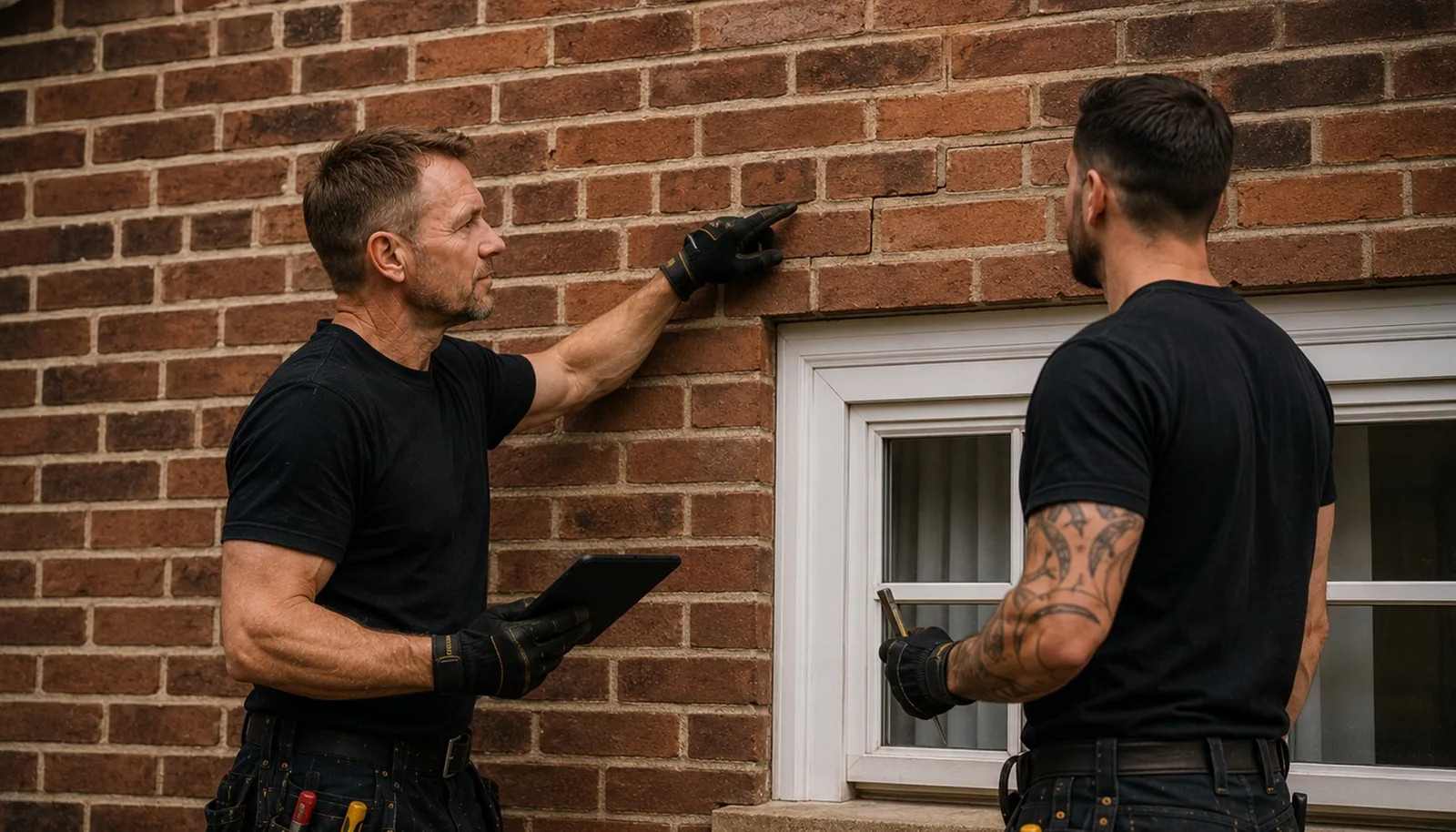
Brickwork and masonry
Crack width matters, but so do pattern, position, nearby openings and whether the movement is changing.
Send brickwork photographs · View masonry services
Brickwork can crack because of thermal movement, shrinkage, local impact, corrosion, failed support, ground movement or defects around openings. Some cracks are stable and suitable for local repair; others require a structural engineer or specialist investigation.
Cosmetic filling should not be used to hide movement that has not been understood.
What to record
- the full crack from end to end;
- whether it follows mortar joints or passes through bricks;
- nearby windows, doors, lintels, corners and rooflines;
- approximate width at several points;
- whether doors or windows have begun sticking;
- when it was first noticed;
- whether it changes after seasons or weather;
- any drainage, tree or ground changes nearby.
A dated photograph with a simple scale can help monitor change. Do not wedge objects into the crack.
Isolated damaged bricks
Spalled or cracked bricks can sometimes be removed and replaced individually. The replacement should match size and type sufficiently to sit correctly in the bond. Surrounding mortar must be removed without damaging adjacent units.
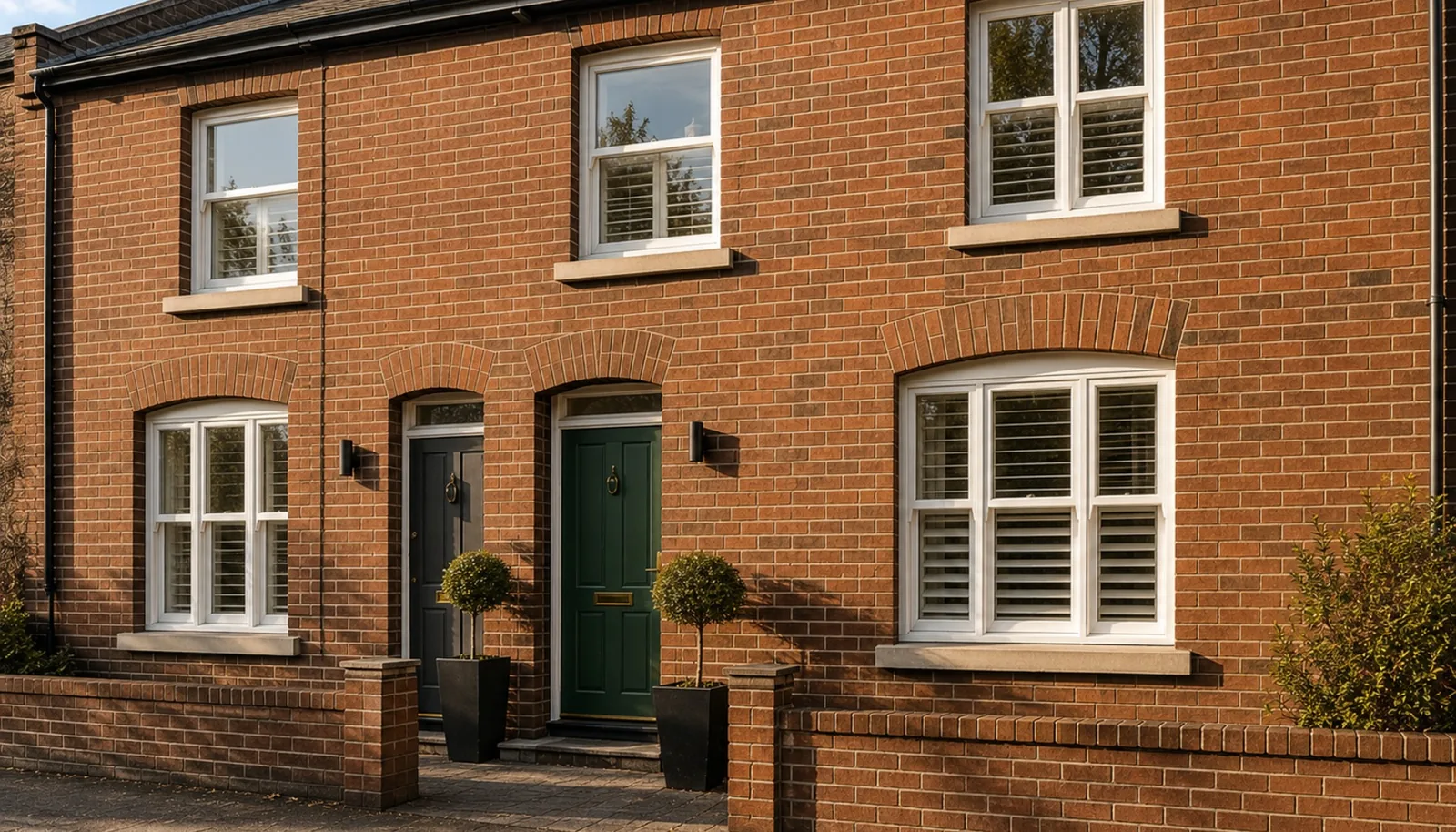
Cracks above openings
Cracking near lintels, arches or window corners may involve movement, corrosion or support. The pattern should be assessed before local mortar is renewed. G&M does not advertise structural design or proprietary crack-stitching as a standard service.
Water and frost
Repeated saturation can contribute to damaged brick faces, especially where gutters, sills, copings or ground levels keep the area wet. Repairing the brick without addressing the source can lead to repeat failure.
When specialist advice is sensible
Seek appropriate structural assessment for significant, widening or stepped cracks; bulging walls; displaced masonry; movement affecting openings; or cracks linked with foundation or ground concerns.
Questions about cracked brickwork
Can a crack be repointed?
Some stable cracks in mortar joints can be repaired, but the cause and movement need considering first.
Does a stepped crack mean subsidence?
Not automatically. Pattern and change are important, and a qualified assessment may be needed before conclusions are drawn.
Can one damaged brick be replaced?
Often, where the surrounding wall is sound and a suitable replacement can be fitted.
Will the new brick be invisible?
An exact match is not always available. Size and physical compatibility come first, with colour and texture considered carefully.
Send the full crack pattern
Include the wall, openings, ground and roofline around it. Tell us if the crack has changed.