Roofing
Tiles or slates shed the weather, while fixings, battens, underlay, ventilation and junctions support the roof's performance.
Discuss pitched roofing · Read about damaged tiles
Pitched roofs vary in material, pitch, age and exposure. Concrete or clay tiles and natural or man-made slates have different dimensions, fixings and repair methods. Replacement materials must suit the existing covering and layout.
Common reasons for enquiry
- slipped, cracked or missing tiles or slates;
- storm damage and loose materials;
- leaks around chimneys, walls or roof intersections;
- failed ridge or verge components;
- moss, debris or blocked rainwater paths;
- signs of damaged underlay or battens;
- condensation or ventilation concerns;
- an ageing roof with repeated local repairs.
Coverings and fixings
A displaced tile may have failed because of impact, wind, a broken nib, corroded fixing or movement in the support. Simply pushing it back may not secure it.
Slates require compatible sizing and correct fixing or repair methods. Unnecessary holes or heavy-handed lifting can damage adjacent units.
Ridges, verges and junctions
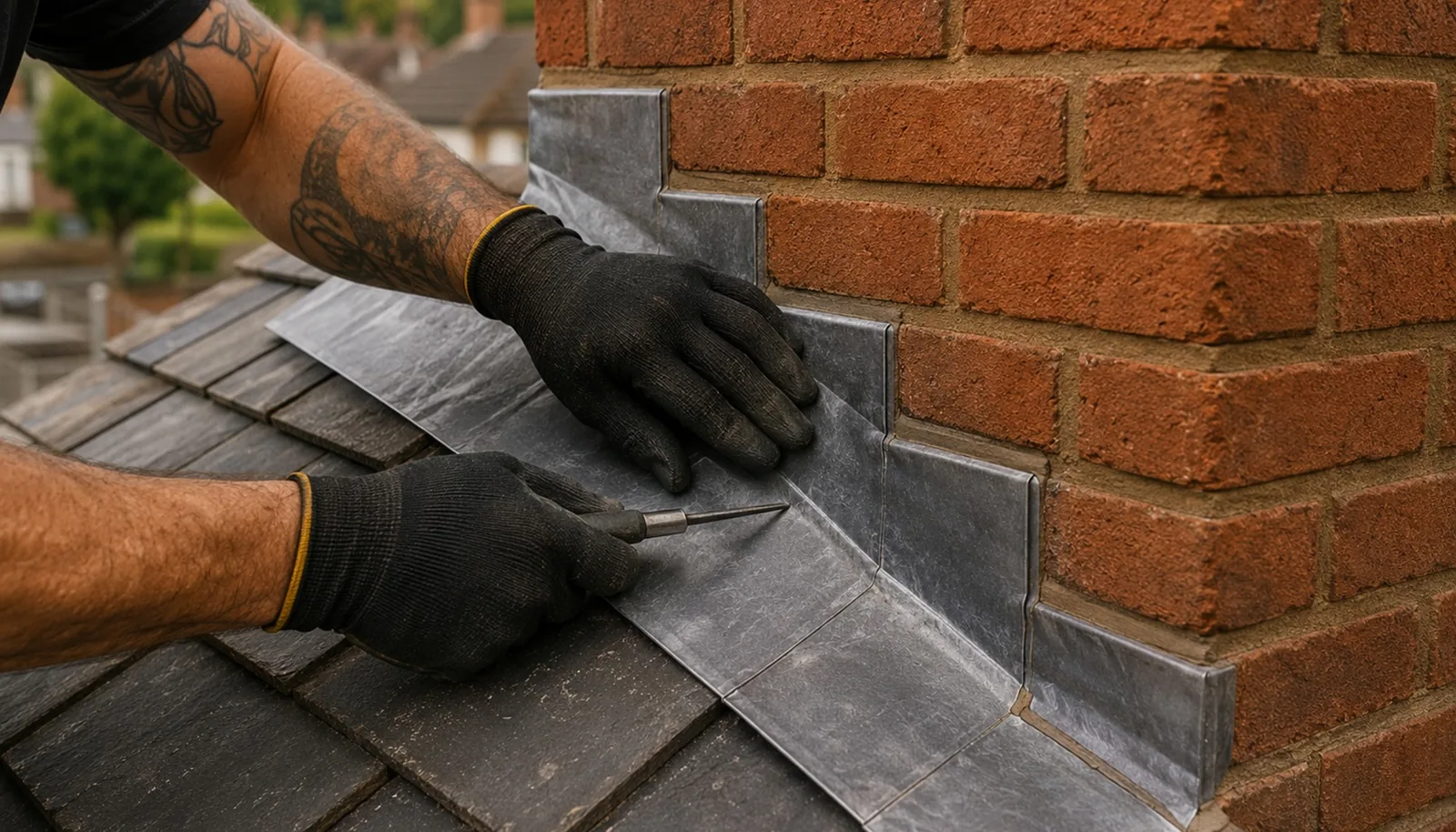
The perimeter and junctions are often where weather finds a route. Ridges, verges, abutments, valleys, flashings and chimney details should be considered with the covering.
Ventilation and condensation
Moisture inside a roof space can come from water entry or condensation. Ventilation, insulation, vapour movement and occupancy all matter. Adding a vent without understanding the roof build-up is not a universal cure.
Repair versus re-covering
Local repairs suit isolated defects in an otherwise serviceable roof. Re-covering may need considering where failures are widespread, fixings or battens have deteriorated, the covering is at the end of useful condition or repeated access makes patching uneconomic.
Changing the roof covering or carrying out wider renewal can trigger Building Regulations checks, including structural and thermal considerations.
Access
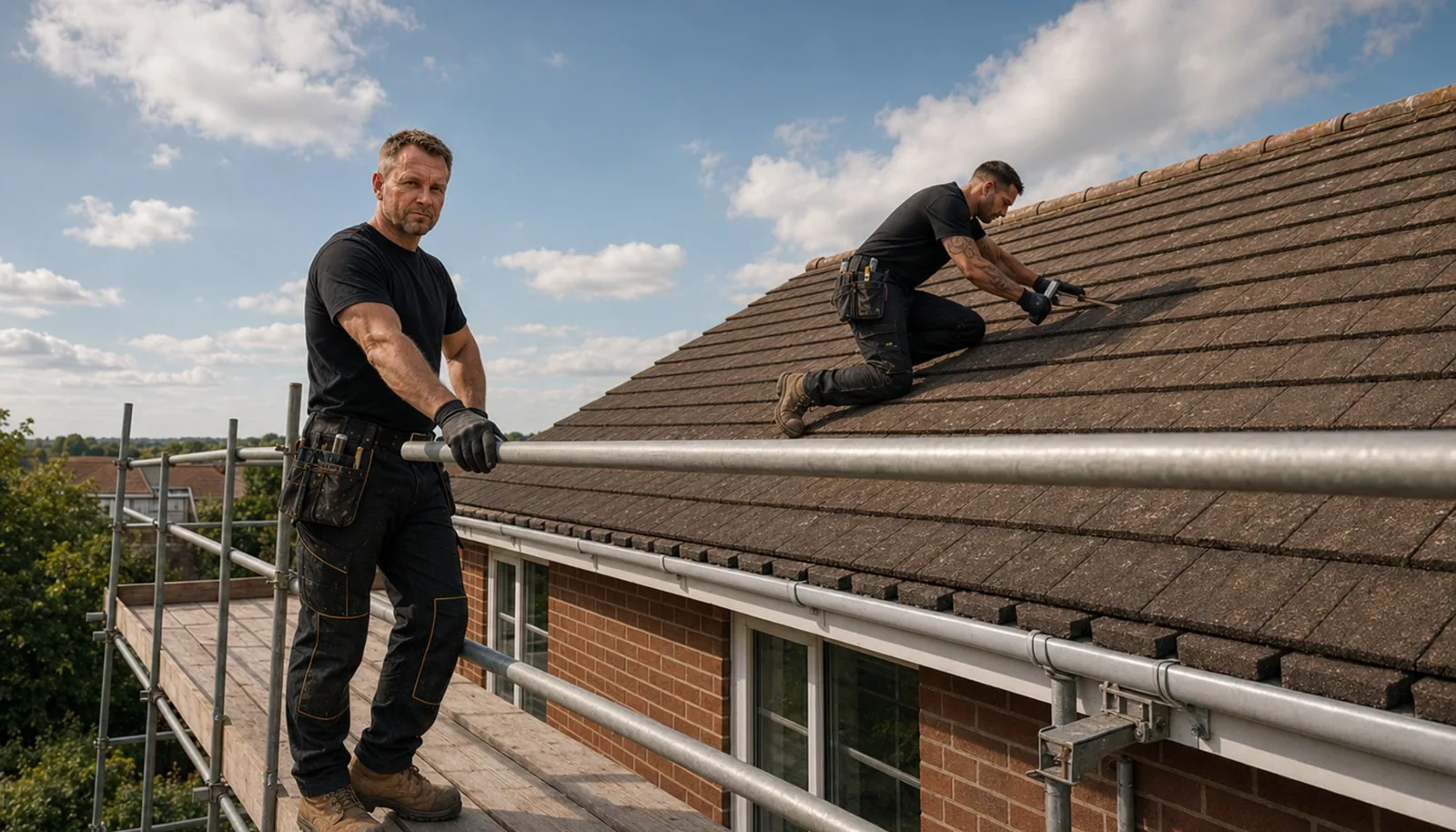
Sloping roofs require appropriate protection against falls and falling materials. Scaffolding, edge protection, roof ladders or other equipment may be needed depending on the task.
Questions about pitched roofs
Can a different tile be used if the original is unavailable?
Compatibility, profile, size, headlap, weight and appearance must be considered. A near match that does not sit or fix correctly is not a sound repair.
Is moss proof that the roof needs replacement?
No. Moss can retain moisture and obstruct details, but the covering and fixings need assessment. Removal must not damage the roof.
What does torn underlay mean?
Underlay provides secondary weather protection, but access and the extent of damage matter. It cannot always be repaired properly from inside.
Do all ridge tiles need replacing with a dry system?
No. The roof condition, existing system and required repair should guide the decision.
Send views of the whole slope
Include ridges, verges, chimneys and the area below the damage. Ground-level photographs are safer than improvised access.