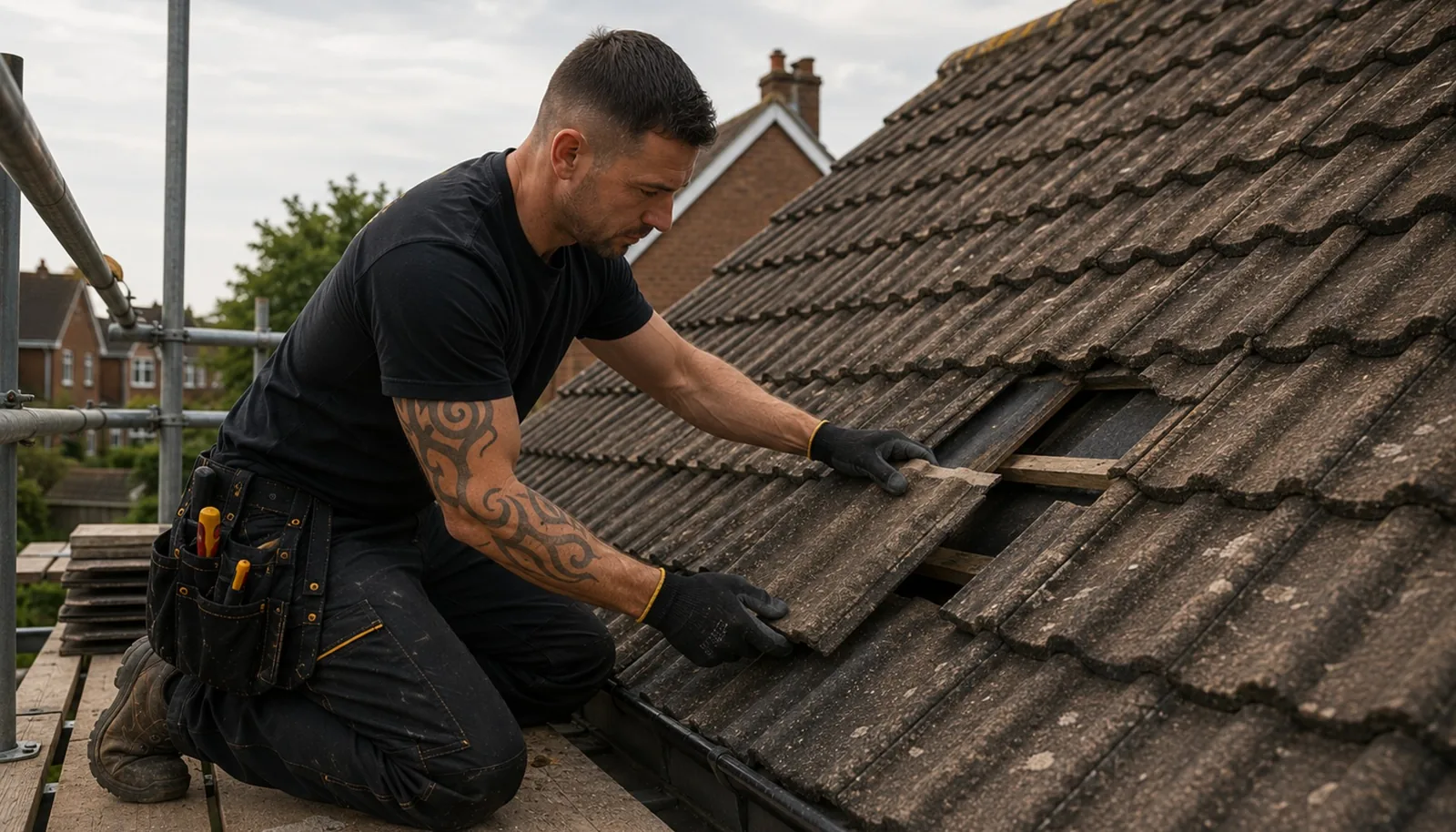
Pitched-roof guidance
A single displaced tile or slate can be a local repair, but it can also be evidence of failed fixings, wind damage or deterioration around it.
Report roof-tile damage · View pitched-roof repairs
Do not climb onto the roof. Keep people away from the area below if material appears loose, and use ground-level photographs to record what has changed.
Common warning signs
Look for:
- a visible gap or uneven course;
- fragments in a gutter, garden or driveway;
- a tile or slate hanging out of line;
- daylight or debris in the roof space;
- a new ceiling stain after rain;
- several disturbed coverings after wind;
- loose ridge, verge or flashing nearby.
A photograph taken before and after a storm can be particularly useful.
Why tiles and slates move
Causes can include:
- broken or corroded fixings;
- wind uplift;
- a cracked covering;
- failed battens;
- impact or foot traffic;
- movement around a roof detail;
- poor previous repair;
- wider deterioration with age.
Replacing the visible piece without checking its support and the surrounding area can leave the cause in place.

Tile and slate repairs are not identical
Interlocking concrete or clay tiles, plain tiles and natural slates use different laps, fixings and replacement methods. The repair should preserve the roof's intended weathering pattern.
A visually similar substitute may still differ in profile, size, headlap or fixing position. Matching must be practical as well as cosmetic.
What a professional assessment considers
Subject to safe access, the review may consider:
- the covering type and damaged area;
- fixings, battens and accessible underlay;
- nearby ridge, verge, valley or flashing;
- whether more than one piece has moved;
- evidence inside the roof space;
- safe access and protection below;
- availability of a suitable replacement.
The quotation should make clear whether it covers an isolated replacement, local making good or wider work.
What not to do
- Do not push a tile back from an unsecured ladder.
- Do not walk across surrounding coverings.
- Do not rely on foam, general sealant or adhesive as a universal fix.
- Do not place a bucket in an unsafe loft position.
- Do not touch wet electrical fittings.
- Do not assume the visible gap is the only defect after a storm.
Temporary weather protection
Where an immediate permanent repair is not possible, a competent temporary measure may reduce water entry. It still requires suitable access, restraint and detailing. A loose tarpaulin is not a safe or durable repair.
When the matter is urgent
Seek prompt help when:
- material may fall;
- water is actively entering;
- several coverings have lifted;
- the damaged area is beside a chimney, valley or rooflight;
- an internal ceiling is bulging;
- further high winds or heavy rain are expected.
Emergency response depends on access, weather, availability and the ability to work safely. No general page can promise immediate attendance.
Information to send
Include:
- the property and roof elevation;
- when the damage appeared;
- whether fragments were found;
- safe photographs from outside and inside;
- any current water entry;
- access constraints such as a conservatory or narrow side passage;
- known previous repairs.