Flat roofing
A felt roof is more than the mineral surface you can see. The layers, bond, laps, deck and edge details work together.
Discuss felt roofing · Compare flat-roof systems
Modern roofing felt is generally a reinforced bituminous membrane installed as part of a compatible system. Depending on the specification, layers may be torch-applied, self-adhesive, mechanically fixed or bonded by another approved method.
Common felt-roof defects
- splits or cracks in weathered areas;
- blistering or loss of adhesion;
- open laps;
- failed perimeter or upstand details;
- damage around outlets or penetrations;
- movement over board joints;
- repeated patches with no coherent drainage detail;
- soft or wet decking beneath the covering.
Surface damage should be assessed with the condition below it. A patch cannot restore a failed deck.
Torch application and fire risk
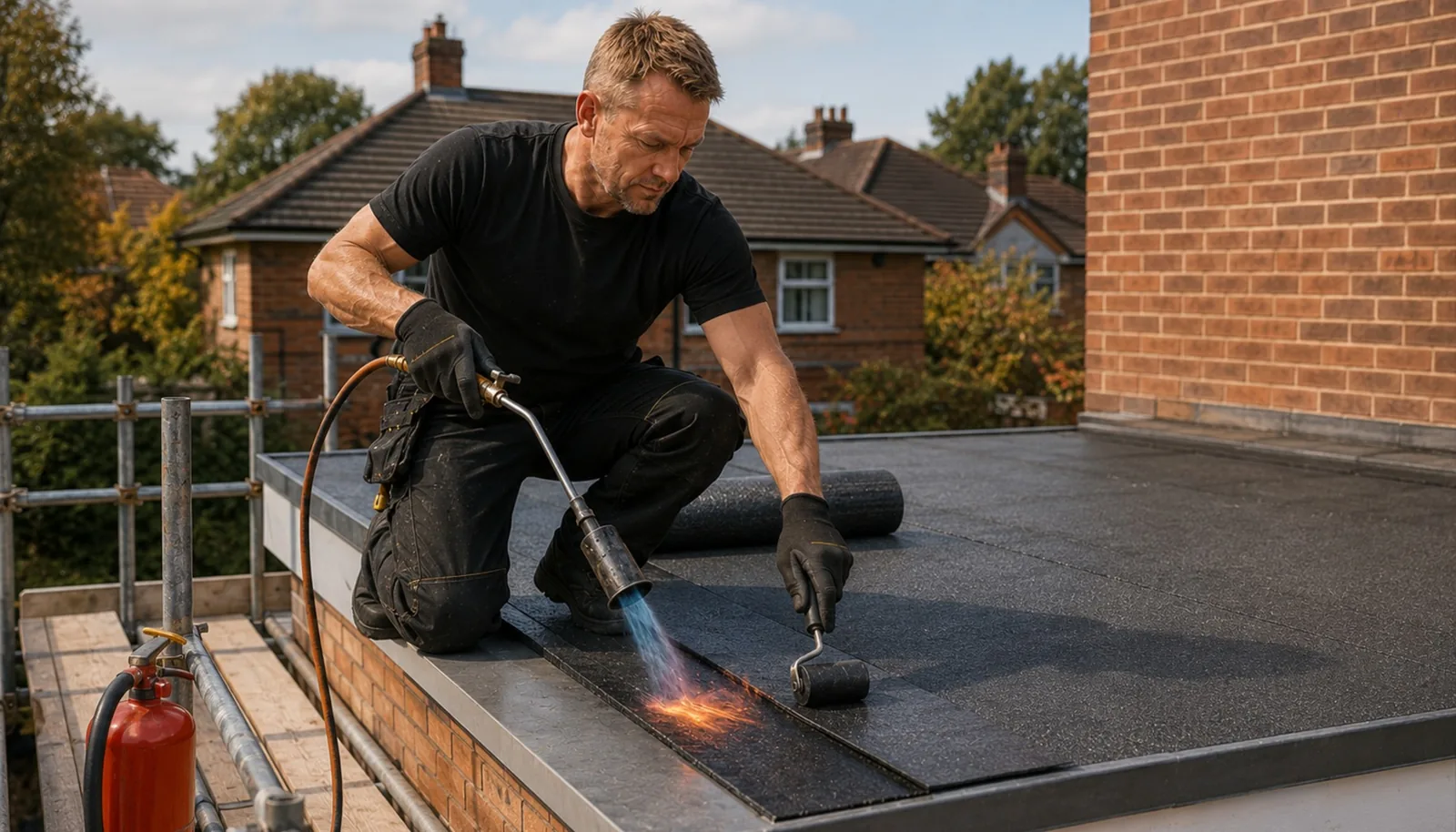
Torch-on felt uses heat to bond bituminous layers. Naked flame near combustible decks, insulation, cavities, cladding or concealed voids creates serious risk. The roof must be assessed for a safe application method, and torch-free alternatives may be required at vulnerable details or across the whole area.
Fire safety is part of the specification, not an optional precaution added after materials arrive.
Preparation and layers
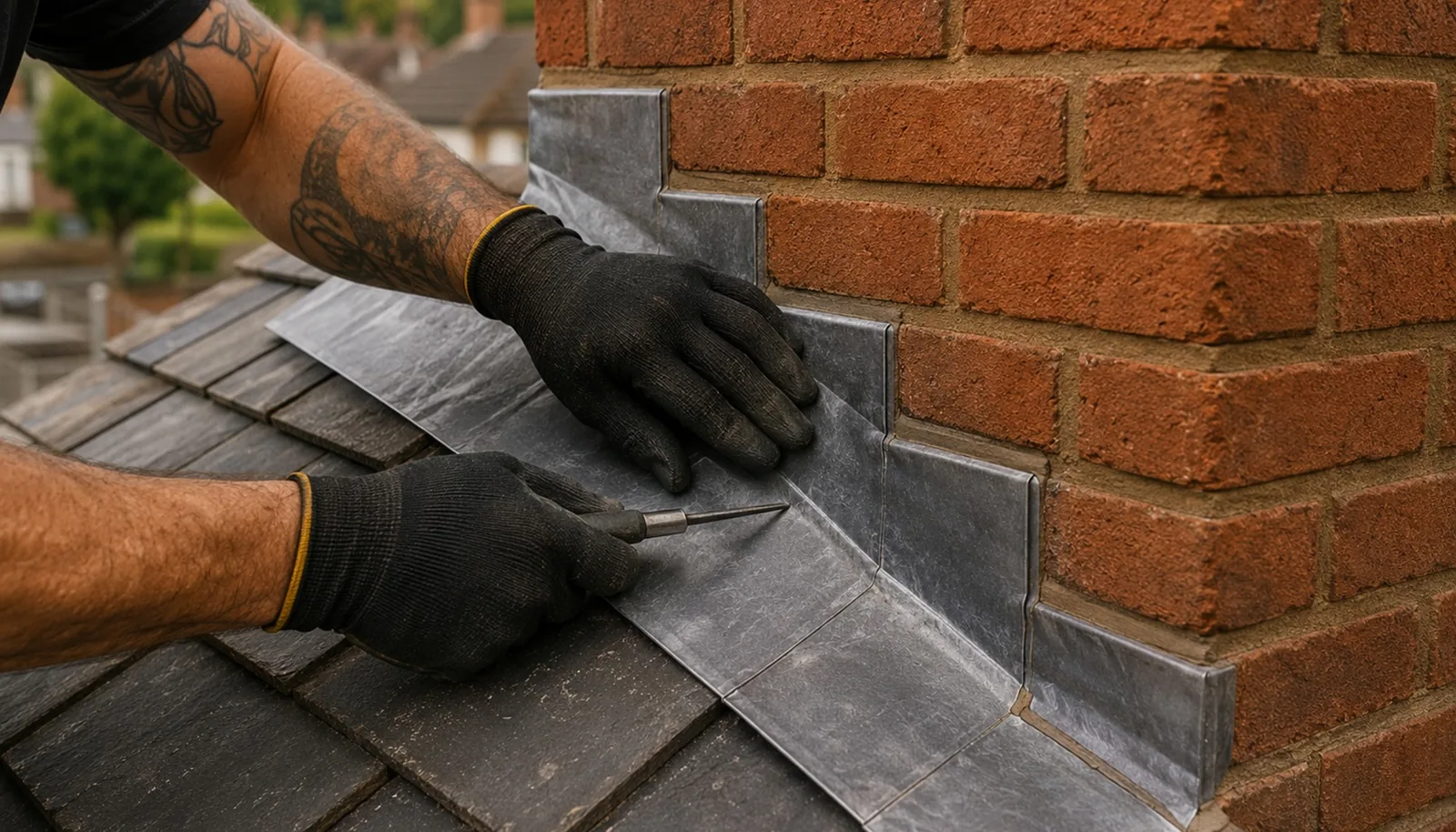
The deck needs to be sound, correctly fixed, dry and suitable for the system. Primers, underlays, cap sheets, laps, upstands and outlets should follow the chosen manufacturer's specification.
Mixing unrelated products or omitting a layer because the finished roof “looks covered” can undermine the system.
Repair or renewal?
A local repair may suit an isolated puncture or open detail where the surrounding felt remains bonded and serviceable. Renewal is more likely where the membrane is brittle, blistered across a wider area, poorly detailed or covering a damaged deck.
Weather and access
Wet, frosty or windy conditions can make the work unsafe or prevent correct bonding. Roof access and fire precautions must be planned before installation.
Questions about felt roofing
Is torch-on felt always the right felt system?
No. The substrate, fire risk, detail and specification determine whether torch application is appropriate.
Can a blister be cut and sealed?
Some local defects can be repaired, but the cause and surrounding adhesion need assessment. Widespread blistering may indicate a larger problem.
Can felt be laid over old felt?
An overlay may be possible in some specifications, but moisture, adhesion, weight, falls, upstands and existing defects must be considered.
Why has a lap opened?
Movement, poor bonding, contamination, inadequate heat or ageing may contribute. The surrounding system needs checking.
Send close views and a full roof view
Include edges, wall junctions, outlets, patches and any area where water remains after rain.