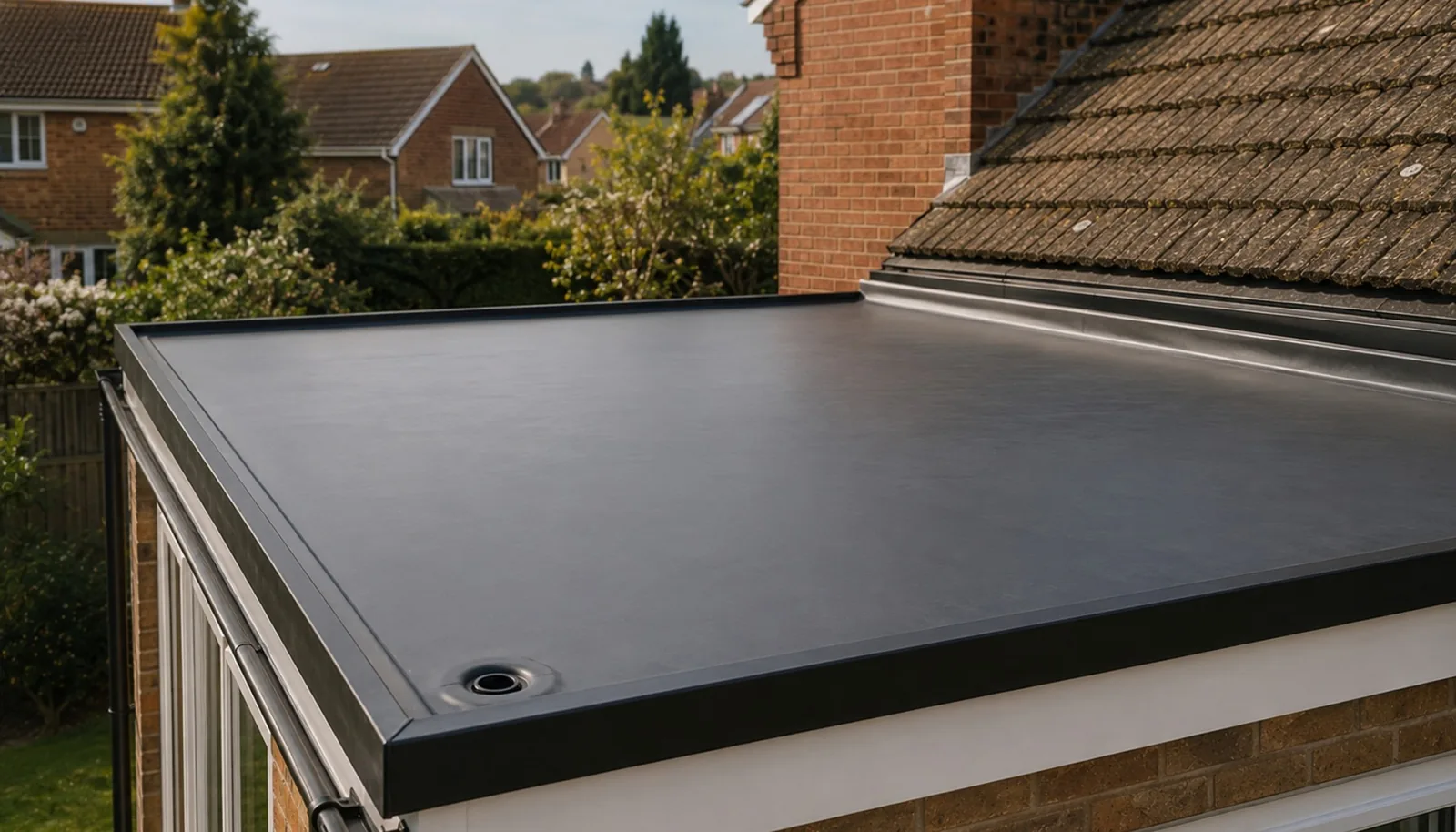
Flat roofing
Felt, EPDM and GRP can all form effective roofs when the structure and detailing suit the chosen system.
Discuss a flat roof · Read flat-roof maintenance guidance
A flat roof is not truly level. It needs a route for water, suitable outlets and details that keep water out at walls, edges, kerbs and penetrations. The visible covering is only part of the build-up.
What should be checked
- the deck and supporting structure;
- the roof's falls and areas of persistent ponding;
- outlets, gutters and downpipes;
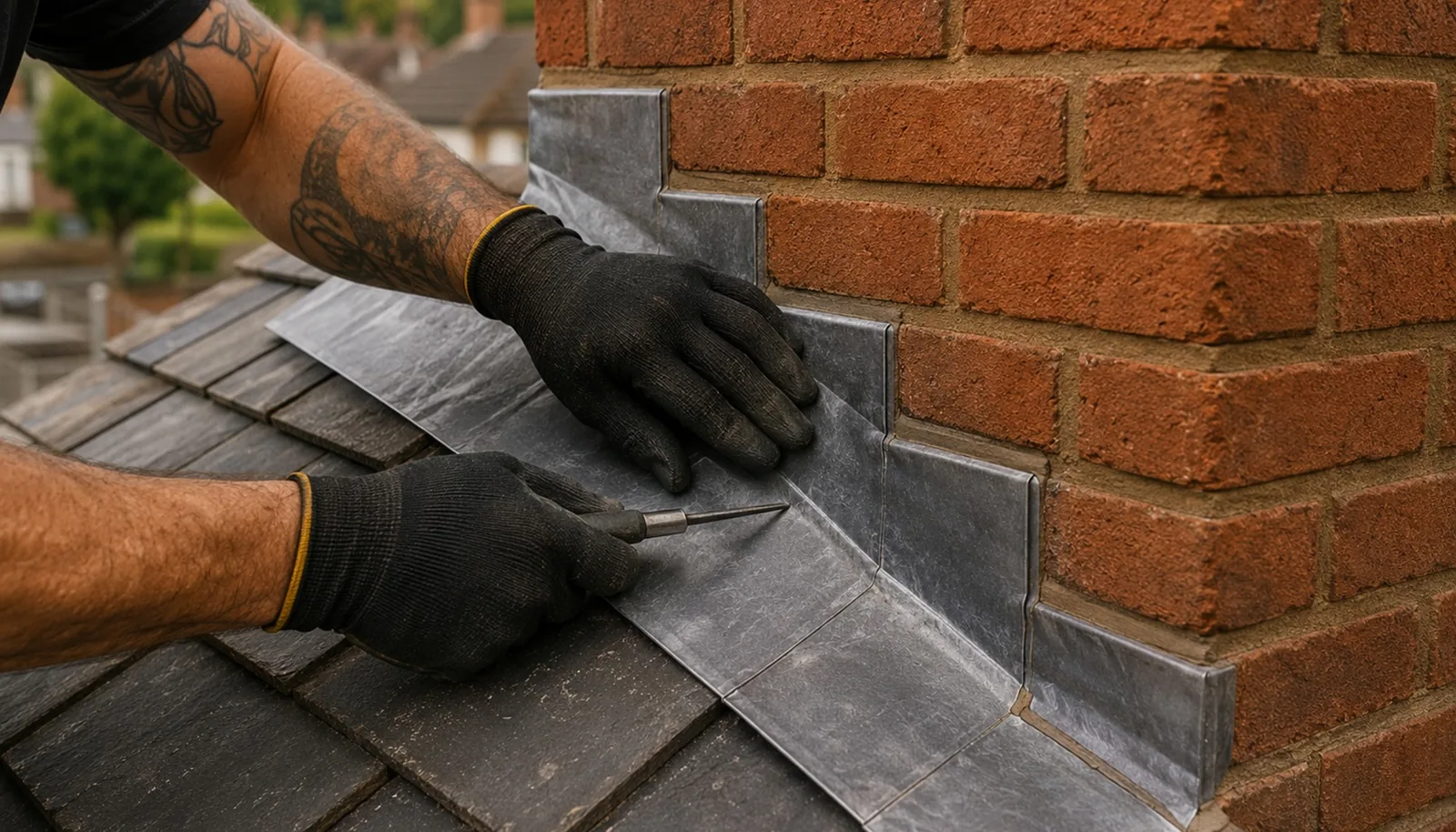
- upstand heights and wall junctions;
- edge trims and drip details;
- penetrations, rooflights and adjoining coverings;
- insulation and ventilation arrangement;
- previous layers and repairs;
- safe access and working space.
Felt roofing
Modern built-up felt systems use compatible layers and carefully formed laps and details. Torch application introduces fire risk and is not suitable around every substrate or junction; alternative application methods may be required.
EPDM rubber roofing
EPDM is commonly installed as a large flexible membrane with dedicated adhesives, tapes and trims. The deck must be sound, clean and dry, and corners, outlets and upstands need the system's correct details.
GRP fibreglass roofing
GRP is a rigid, site-applied laminate formed over a suitable deck, followed by a protective topcoat. Board joints, trims, resin mixing, weather and temperature influence the finish.
Repair or renewal?
A small puncture or local detail may be repairable if the deck and surrounding system are sound. Widespread splits, trapped moisture, failed adhesion, soft decking or fundamentally poor falls can make local patching poor value.
Overlaying an unknown or wet build-up may trap the problem beneath a new surface.
Weather and drying
Flat-roof systems have specific limits for moisture, temperature and rain. The manufacturer instructions for the actual system should be followed. Installation should not proceed simply because a narrow dry window appears on a weather app.
Approvals and insulation
Many minor repairs do not need a Building Regulations application, but wider re-covering or replacement of a thermal element can trigger checks and insulation requirements. Structural changes and listed buildings may need further advice.
Questions about flat roofing
Is ponding always a leak?
No, but persistent standing water can show poor falls or blocked outlets and may increase stress on details. The roof should be inspected.
Can a new covering go over the old one?
Sometimes systems allow overlays, but adhesion, moisture, weight, fire safety, detailing and warranty requirements must be assessed.
Which system lasts longest?
Product quality, deck, detailing, installation and maintenance matter more than a simple material slogan. The system should suit the roof.
Can flat roofs be walked on?
Only where the system and construction allow it. Unnecessary foot traffic can damage coverings and should be avoided.
Show the outlets and every edge
Include the whole roof from a safe position, close views of defects and photographs of any internal staining.