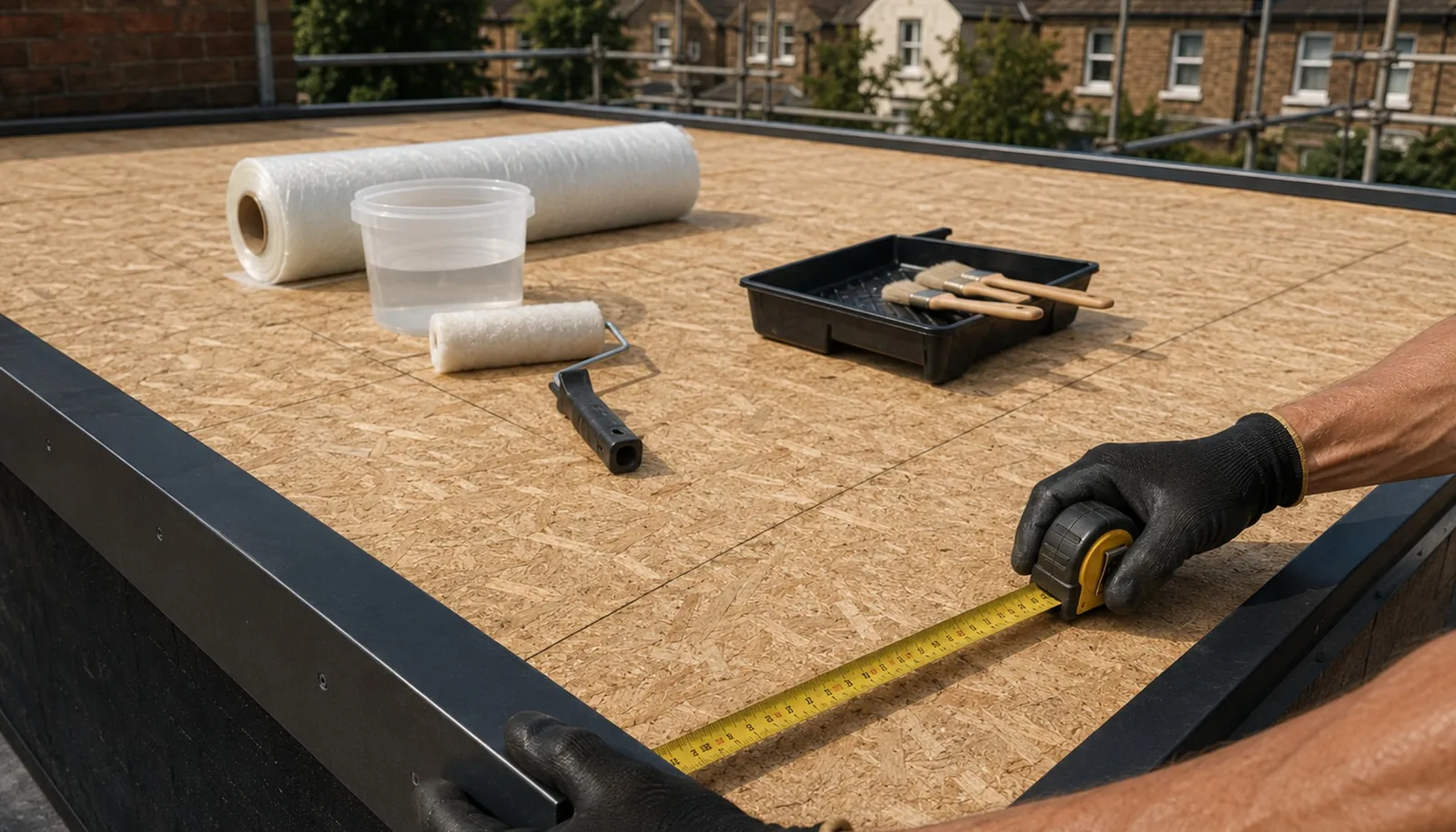
Flat roofing
Board layout, joints, trims, resin mixing, temperature and dry weather all affect a fibreglass roof.
Discuss GRP roofing · Compare flat-roof systems
GRP roofing uses glass-fibre reinforcement saturated with resin to form a rigid laminate over a suitable roof deck. A protective topcoat provides the finished weathering surface.
It is commonly considered for domestic flat roofs, extensions, garages and similar areas where the layout and structure suit a rigid system.
Deck preparation
The deck must be sound, dry, correctly fixed and installed to the system specification. Board type, orientation, joints and edge support matter because movement below can show through the rigid laminate.
Old coverings and damp boards should not simply be hidden beneath the new roof.
Trims and details
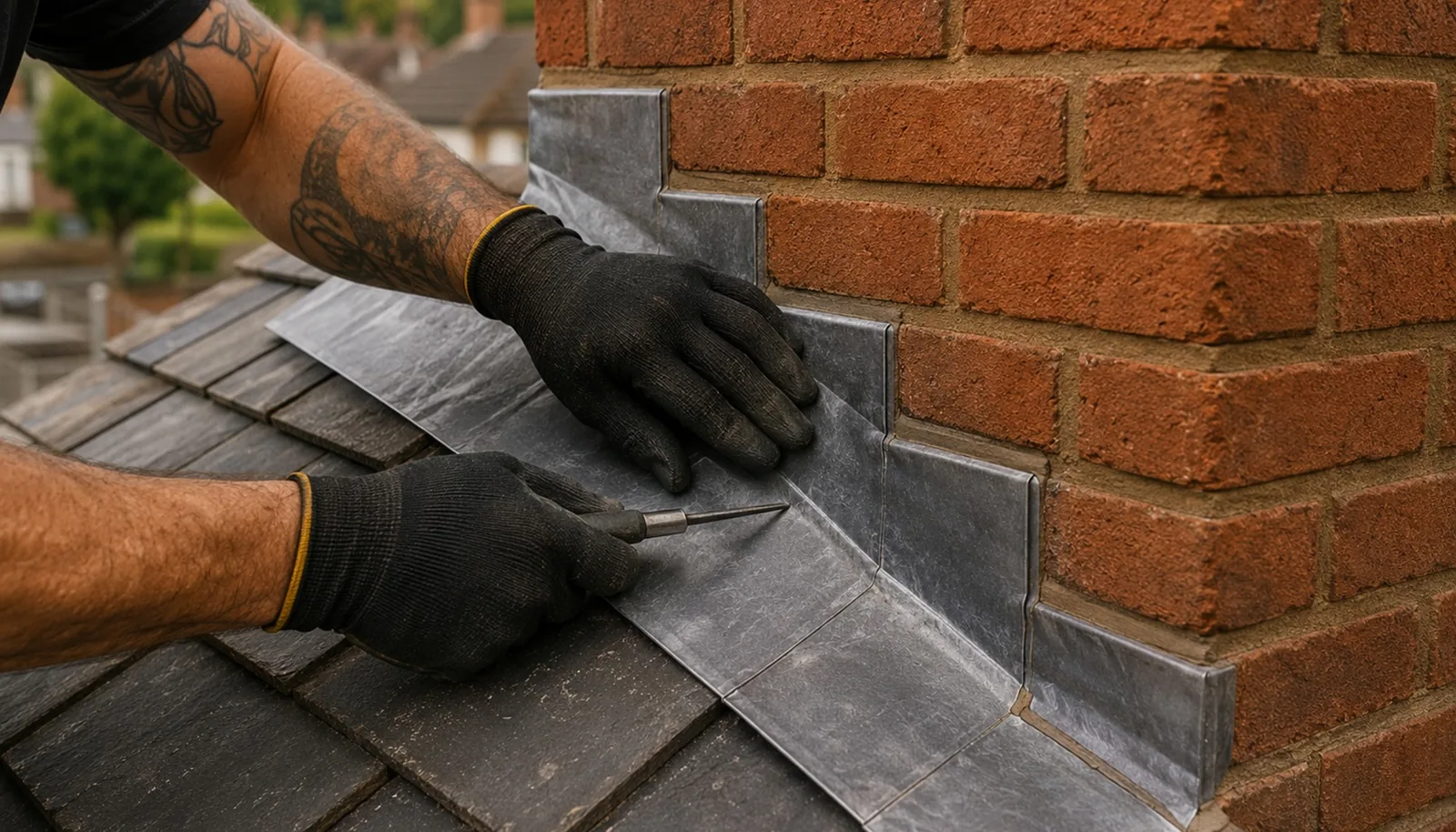
Preformed trims help create drips, raised edges, wall abutments and other perimeter details. They must be selected and fixed for the actual edge. Outlets, corners and penetrations need careful reinforcement and continuity.
Laminating and topcoat
Resin and catalyst are mixed for the working conditions, then applied with the reinforcement so the fibres are properly wetted and consolidated. The laminate must cure before the compatible topcoat is applied.
Incorrect mixing, working beyond the usable time or leaving dry fibres can affect the result.
Weather limits
GRP materials have defined temperature and moisture limits. Rain, dew, damp decking, strong direct heat and falling overnight temperature can interrupt curing or damage the finish. The current manufacturer's guide for the actual system must control the work.
Common defects
- cracking at board joints or movement points;
- pinholes or dry reinforcement;
- poor adhesion to a damp or contaminated deck;
- failed topcoat;
- weak or cracked trims;
- ponding caused by poor falls;
- damage from unsuitable foot traffic.
A local repair may be possible where the laminate and deck around it remain sound.
GRP compared with flexible membranes
GRP forms a rigid shell; EPDM remains flexible; felt is a layered bituminous system. The right choice depends on shape, deck, movement, details, weather window and the installer following one coherent system.
Questions about GRP roofs
Can GRP be applied to wet boards?
No sound system should trap moisture beneath the laminate. The deck needs suitable dry conditions.
Why are board joints visible?
Movement, board layout, fixing or insufficient reinforcement may contribute. The roof needs assessment rather than another cosmetic topcoat alone.
Can a cracked GRP roof be patched?
Some local defects can be repaired with compatible preparation and reinforcement. Widespread movement or failed decking may require more extensive work.
Is the topcoat the waterproof layer?
The laminate provides the main structural waterproofing; the topcoat protects and finishes it. Both must be correctly applied.
Send views of the deck area and every perimeter
Include outlets, trims, wall details, cracks and any areas where water remains.