Fencing guidance
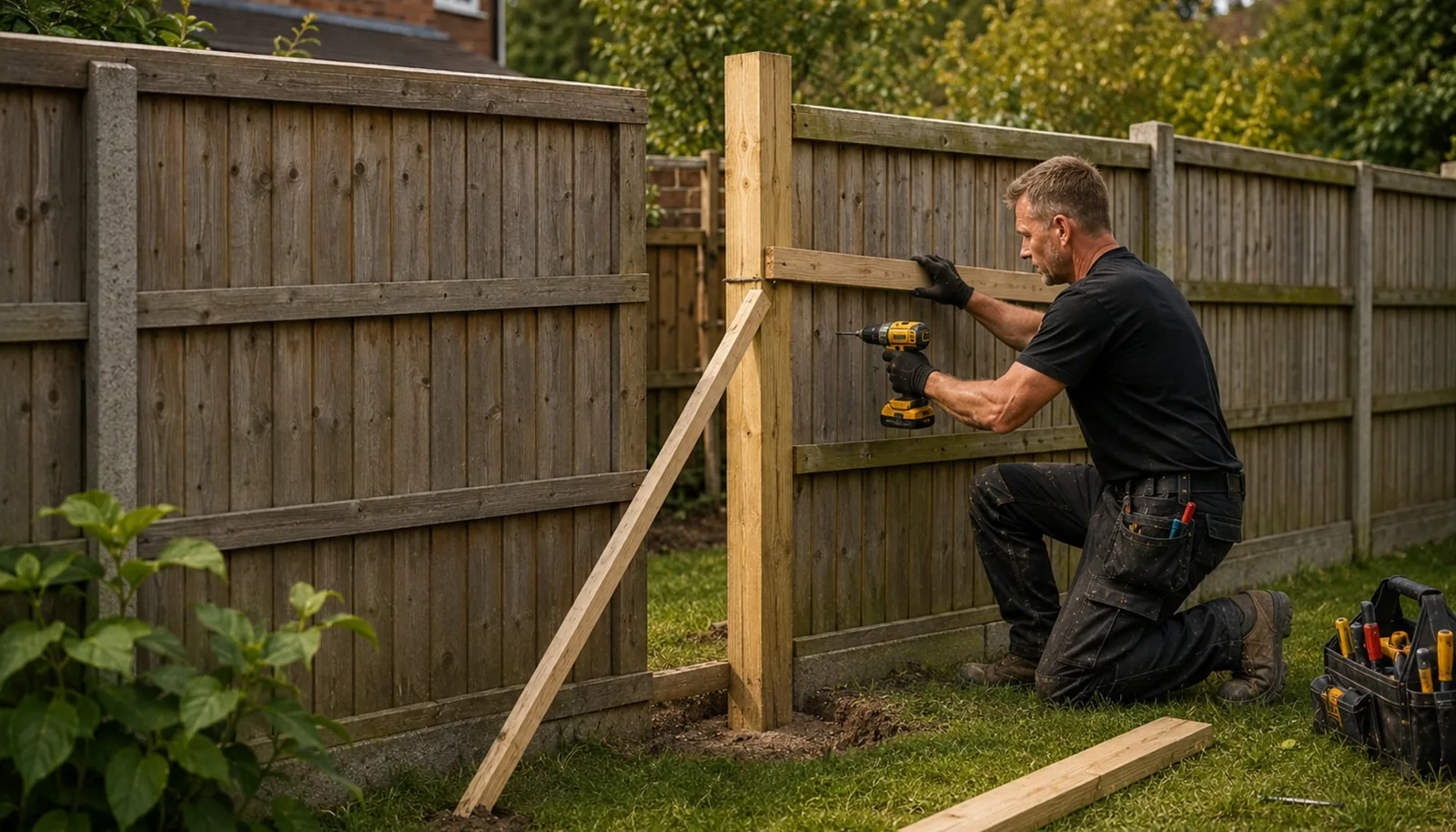
A local repair can be good value when the remaining run is sound. Several failed posts can turn patching into a recurring bill.
Send fence photographs · View fence repair services
Wind usually reveals the weakest part of a fence, but the panel lying in the garden may not be the original cause. Posts can decay at ground level, rails can split, fixings can pull out and concrete around a post can loosen.
The repair decision should consider the full boundary and how the system shares wind load.
Repair is often sensible when
- one panel is damaged but the posts are firm;
- a single post has failed and adjacent rails remain sound;
- a few boards or fixings need replacement;
- a gate needs adjustment and its supports are stable;
- matching parts are available;
- the remaining fence is reasonably straight and serviceable.
A local repair should restore alignment and support, not simply prop the panel until the next storm.
Replacement becomes more realistic when
- several timber posts are rotten at ground level;
- rails and panels are brittle across much of the run;
- concrete posts or foundations have moved repeatedly;
- previous repairs use mixed sizes and weak fixings;
- the fence line has leaned or spread;
- the required privacy, gate or access has changed;
- dismantling for repeated small repairs is becoming poor value.

Check each component
Posts
Posts provide the main support. Timber often deteriorates around the soil line; concrete can crack or lean if its footing moves.
Rails
Rails tie posts and boards together. A sound-looking panel may remain unstable if the rails are split or detached.
Panels and boards
Individual boards can sometimes be replaced. Standard panels are convenient but must fit the actual post spacing.
Gravel boards
These keep panels away from soil and protect lower edges. Failed or missing gravel boards can shorten panel life.
Gates
Gates apply repeated moving load. Their posts, hinges, latch and clearance need separate attention.
Ground, water and vegetation
Raised soil, compost, dense ivy and standing water can trap moisture and hide decay. Roots and old concrete can affect replacement posts. Before work, agree how vegetation will be handled and who owns it.
Wind and design
Tall solid fencing catches more wind than an open design. Exposure, post spacing, system and fixings should match. Making one repaired bay much more rigid than weak surrounding bays can transfer stress.
Boundary and permission checks
Establish ownership and line before instructing work. Height and location can involve planning controls, particularly beside a highway or in a controlled area. A contractor cannot determine a legal boundary dispute from an old fence.
What to photograph
- the whole run from each end;
- both sides where accessible;
- every post at ground level;
- rails and fixings;
- gates and adjoining walls;
- level changes, trees and tight access.
A rough length and height help with the first discussion.
What not to do
- Do not work beneath a loose section in high wind.
- Do not attach heavy new panels to visibly decayed posts.
- Do not remove a shared boundary without confirming authority.
- Do not bury untreated cut ends.
- Do not assume coating will strengthen rotten timber.
Questions about fence value
Is replacing one post disruptive?
It can require removing adjacent panels and old concrete. Access and nearby paving or planting affect the work.
Are concrete posts always longer lasting?
They avoid timber ground contact but can crack, move and be heavier to install. The whole system and ground matter.
Can a neighbour's plants stay attached?
Only if access and repair allow it and the owner agrees. Dense growth may need cutting back to inspect the fence.
Can old panels be reused with new posts?
Yes, if they remain sound and fit the new spacing and system. Handling can reveal hidden weakness.