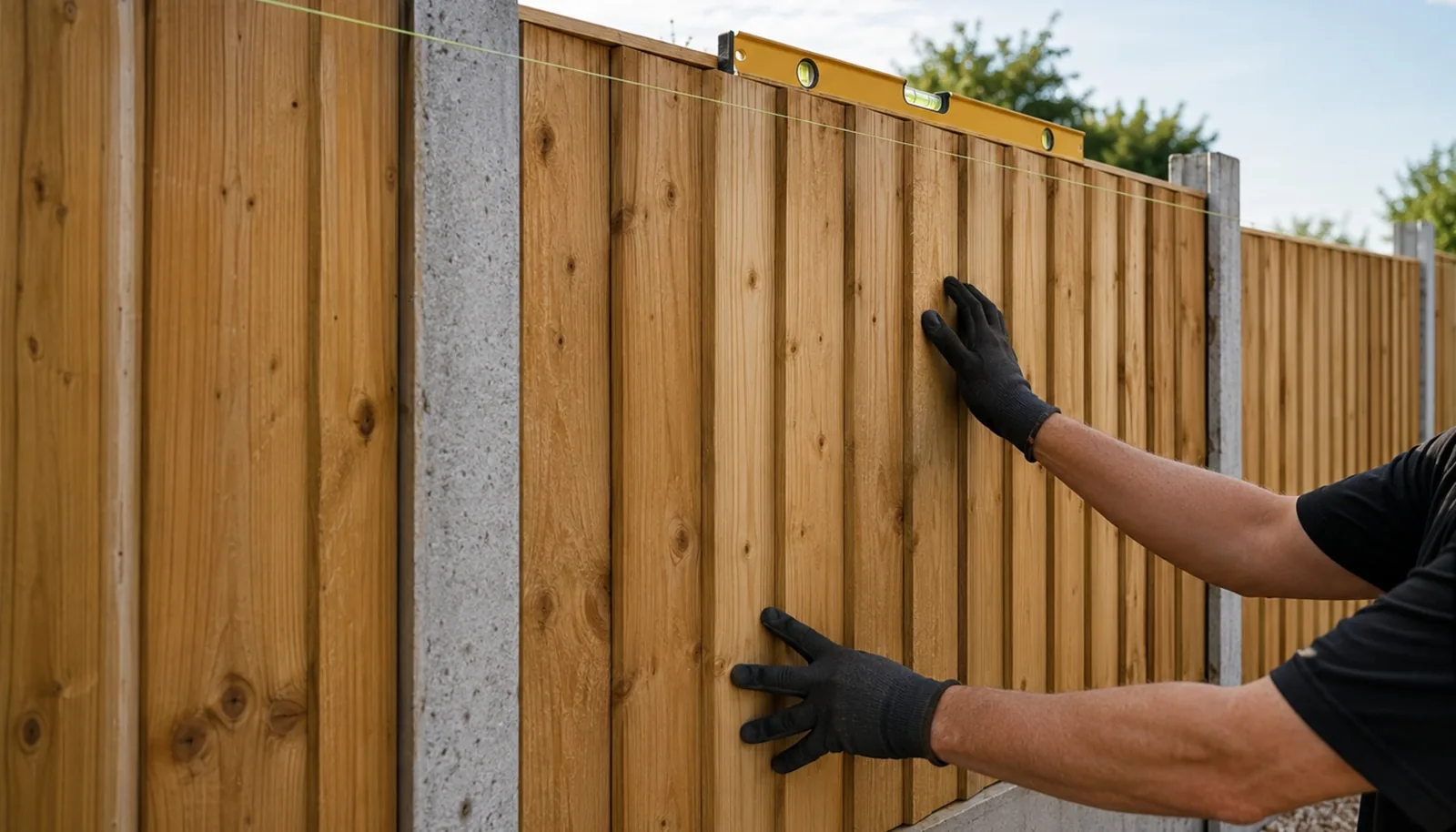
New fencing
The appearance matters, but post foundations, ground conditions, level changes and wind exposure decide how the fence performs.
Discuss new fencing · Compare fence repair
G&M Property Maintenance installs selected residential fencing systems, including standard panels and closeboard or feather-edge arrangements where appropriate. The proposed line and ownership must be clear before old fencing is removed.
Define the boundary and purpose
Is the fence for privacy, security, pet control, wind filtering or simply a neat division? The answer affects height, gaps, gate hardware and maintenance.
Confirm:
- who owns or controls the boundary;
- exact start and finish points;
- agreed height and style;
- gate positions and clear opening width;
- changes in level;
- access to both sides;
- plants, sheds or paving beside the line;
- removal of old concrete and waste.
Posts and foundations
Post type, spacing and setting depth depend on the system, height, ground and exposure. Existing concrete may need removal rather than placing every new post awkwardly beside it.
Timber used in ground contact should be suitably treated for that use. Concrete posts change the weight, handling and appearance but can allow panels to be replaced later.
Panels or closeboard
Prefabricated panels provide a familiar, replaceable system. Closeboard fencing is constructed from posts, rails, gravel boards and individual boards, allowing the line to respond to some site conditions. The right choice depends on access, level changes, budget and appearance.
Gates and hardware
A gate needs sound support, suitable hinges, clearance and a latch that works for the users. Heavy gates can pull ordinary fence posts out of alignment if support is not planned.
Drainage and vegetation
Soil, compost and planting should not be piled against timber where it traps moisture. Water should not be redirected towards neighbouring property.
Permissions
Fence height and position can be subject to planning controls, especially near highways, listed buildings or controlled areas. Check the specific property before assuming replacement is automatically permitted.
Questions about new fencing
Do you install concrete or timber posts?
Both may be discussed where suitable. Ground, access, system and desired maintenance influence the choice.
Can the fence step down a slope?
Often. The layout and panel or board system need setting out so the changes look intentional and remain secure.
Can an old hedge stay?
Possibly, but it may restrict the line, access and future maintenance. Ownership and root condition should be considered.
Will the timber be maintenance free?
No timber is maintenance free. Treatment, exposure, ground contact and later care all matter.
Send the length, height and access
Wide photographs and rough dimensions are useful for the first review. An inspection may still be needed to confirm ground and line.